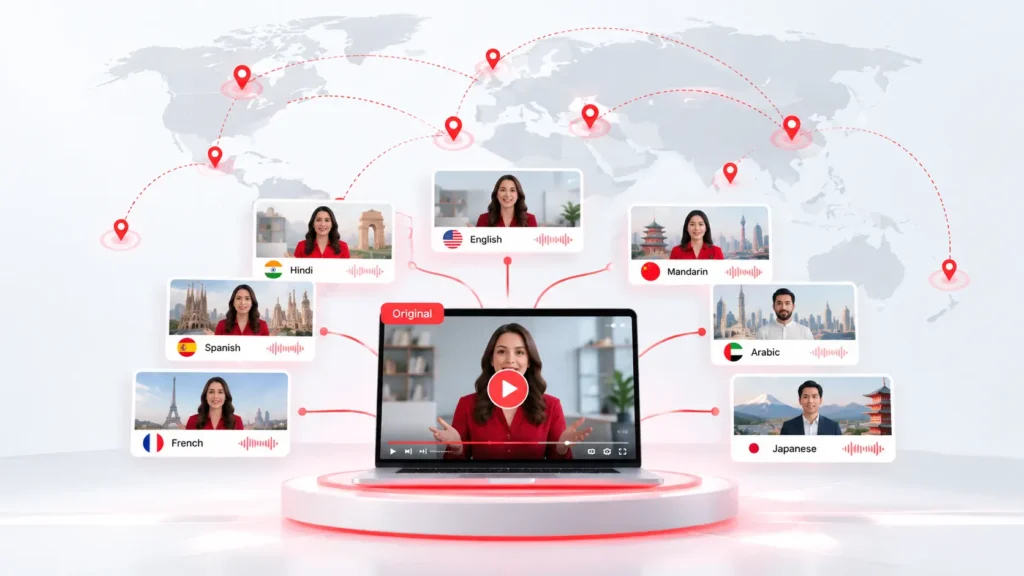
Why Does Choosing the Right AI Video Production Company Matter?
Choosing the right AI video production company matters because AI can increase video output, but it cannot automatically make your message clearer, sharper, or more trusted.
That is where many businesses get the decision wrong.
They compare vendors by tools, timelines, and price. But the real question is different: can this company help buyers understand your product faster and move closer to action?
AI adoption is rising. Wyzowl reports that 63% of video marketers have used AI video tools to create or edit marketing videos [Wyzowl, 2026]. (Wyzowl)
But adoption does not equal business impact. McKinsey’s 2025 State of AI report says many organizations are still working through the gap between pilots and scaled impact [McKinsey, 2025]. (McKinsey & Company)
For wider context before comparing vendors, read the AI video production guide
What Should an AI Video Production Company Actually Do?
An AI video production company should translate your business goal into video assets your buyers can actually use, not just generate AI based content that looks finished.
The real work is not pressing buttons inside AI tools.
The real work is deciding what the video should clarify, where it will be used, and how it will support marketing, sales, onboarding, or customer education.
You should expect them to:
- Define what the video must achieve before choosing tools
- Translate product complexity into a clear buyer message
- Decide where AI helps and where human direction is safer
- Create assets for the right funnel stage, not one generic video
- Review claims, tone, pacing, and CTA before publishing
- Help your team use videos across ads, sales, onboarding, and customer education
A tool operator asks, “What software should we use?”
A business video partner asks, “What should this video help the buyer understand?”
When Are AI Tools Enough, and When Do You Need a Company?
AI tools are enough when the content is simple, low risk, and easy for your team to review. You need a company when the video will influence prospects, explain a complex product, support paid campaigns, or affect brand trust.
Use tools yourself for internal drafts, rough clips, captions, social tests, and quick updates.
Hire a partner when the video will be used on your website, in paid campaigns, by your sales team, or in front of decision makers.
A DIY route can work for quick drafts. But if your video supports sales enablement, product education, or investor confidence, unclear messaging can cost more than production.

What Business Goal Should You Define Before Hiring?
Before hiring, define what the video needs to achieve in the business.
Do not hire around the tool.
Hire around the outcome.
Before you speak to any vendor, decide whether the video is meant to create awareness, explain the product, support sales, reduce onboarding friction, or refresh campaign assets.
Your goal may be:
- More demo bookings
- Better product understanding
- Paid ad testing
- Sales follow up
- Customer onboarding
- Training content
- Feature education
- Social content volume
A paid ad video should be judged by qualified traffic and cost per lead. A sales video should be judged by whether prospects arrive better informed. An onboarding video should be judged by reduced repeat education.
What Experience Should You Look For?
Look for a company that has experience turning complex products into buyer ready video assets, not just producing AI generated clips.
A strong AI video agency should understand buyer education, product explanation, funnel stages, and complex offers.
Check whether they have experience with:
- B2B or SaaS products with long buying cycles
- Explaining complex offers in simple language
- Creating assets for different funnel stages
- Writing scripts that answer buyer objections
- Turning one idea into multiple campaign versions
- Reviewing AI output for accuracy, tone, and buyer fit
This matters because your buyer does not care how the video was made. They care whether they understand why your offer matters.
How Do You Judge Their AI Workflow?
You judge their workflow by checking whether they start with the buyer problem, not the AI tool.
A weak workflow starts with software.
A strong workflow starts with one question: what does the buyer need to understand before they trust the next step?
A strong workflow should include:
- A clear brief
- Script before visuals
- Tool choice based on use case
- Human review points
- Brand tone checks
- Accuracy checks
- Channel specific versions
- A clear revision process
What Quality Checks Should the Company Have?
The right company should not only check whether the video looks good. It should check whether the video is safe, clear, specific, and useful enough to influence a buyer.
This is where many AI outputs fail.
They look finished, but they may not be useful.
For AI and trust heavy products, the video should make the risk, value, and buyer next step easier to understand.
Your partner should review:
- Whether the script explains the product accurately
- Whether the claims are safe and supportable
- Whether the tone matches your brand
- Whether the buyer problem appears early
- Whether the visuals support the message
- Whether the CTA fits the funnel stage
- Whether the asset works in the channel where it will be used
HubSpot’s 2026 State of Marketing report frames AI, brand point of view, trust, and growth as major marketing priorities [HubSpot, 2026]. For this topic, the practical takeaway is that more content only helps when the brand still feels credible. (HubSpot)
How Should You Review Their Portfolio?
Review the portfolio for clarity, not just visual style.
A portfolio should not only prove that the company can make polished videos. It should prove that the company can make complex ideas easier to understand.
Score each portfolio example on five questions:
- Is the buyer problem clear in the first few seconds?
- Does the video explain the product without overloading the viewer?
- Does it feel specific to the brand, or could any competitor use it?
- Is the next step obvious?
- Would this asset help marketing or sales do their job better?
This is where a normal video agency and an AI production company can both fall short.
The issue is not only production quality. The issue is whether the video moves the buyer forward.
Here is the kind of portfolio example you should review carefully. Don’t only look at animation quality. Watch whether the buyer problem, product value, and next step become clear.

What Questions Should You Ask Before Hiring?
Ask questions that reveal strategy, review process, and business fit.
Use these before choosing any AI production company:
- How do you decide whether AI is right for this video?
- What parts of the process are AI assisted?
- Who writes and reviews the script?
- How do you protect brand tone?
- How do you check factual accuracy?
- Can you create versions for different channels?
- What does the revision process look like?
- Can you show similar business videos?
- How do you measure whether the video worked?
- What happens if AI output is not good enough?
What Red Flags Should You Avoid?
Avoid companies that sell AI speed without explaining strategy, quality control, or business use.
Red flags include:
- They lead with tools instead of outcomes
- They promise fully automated video without review
- They do not ask about your audience
- They skip scripting
- Their examples look generic
- They use avatars for every format
- They do not offer revisions
- They cannot explain how the video will be used
- They talk about speed but not accuracy
- They never ask what sales needs buyers to understand
Deloitte Digital’s 2026 marketing trends report says generative AI is moving toward broader customer facing use, while human creativity and machine intelligence need to work together [Deloitte Digital, 2026]. (Deloitte)
That is the bar. AI should reduce production friction without weakening the message.

Should You Choose a Fully AI Company or a Hybrid Production Partner?
A hybrid production partner is usually better when the video must move beyond output and influence how buyers understand your business.
Fully AI providers can help with simple repeat content.
Hybrid partners are stronger when the message is complex, the buyer is skeptical, or the video will be used in sales, paid campaigns, or product education.
Use this rule:
| Situation | Better fit |
| Quick internal clip | AI tool |
| Social variation | AI assisted workflow |
| Complex product explainer | Hybrid partner |
| Brand video | Traditional or hybrid partner |
| Sales enablement asset | Hybrid partner |
For a deeper model, read AI video production vs traditional video production
How Do You Know Which Company Is Right for Your Business?
The right company asks about your buyer, sales process, content goals, and brand trust before talking about tools.
Choose them if they can:
- Explain your product clearly
- Recommend the right video format
- Show relevant work
- Use AI where it saves time
- Use human review where quality matters
- Deliver versions for your funnel
- Connect video output to business goals
The benefits of AI video production matter only when the workflow leads to usable assets, not just more files.
If you want to pressure test their process, compare it against real AI video production workflow lessons before signing.
Conclusion: What Is the Best Way to Choose an AI Video Production Company?
The best way to choose an AI video production company is to look beyond tools and judge strategy, workflow, quality control, and buyer clarity.
The best AI video production company for your business is not the one with the longest software list.
It is the one that can make your product easier to understand, your sales conversations easier to start, and your campaign assets easier to scale.
If it only gives you more videos, it has not solved the real problem.
Motionvillee helps businesses plan the right mix of AI assisted and traditional production so every video asset supports clarity, trust, pipeline, and growth.