
Animated Explainer Video: 9 Amazing Types of Animation Styles
The reason for the exploding popularity of animated explainer videos is they are sound educational media with eye-catching visuals, narrative audio, and snappy animations. The colorful features that animated explainer videos bring to the table make them hard to skip or miss. Also, they are a double-edged sword when it comes to being an appropriate marketing tool to execute any business marketing strategy.
Animation has transformed how brands communicate complex ideas, showcase products, and engage audiences. Understanding the different animation styles available helps you choose the format that best aligns with your message, budget, and target audience. When considering your overall video strategy, exploring 6 explainer video styles and when to use each one provides broader context for how animation fits within your content marketing mix.
Let’s skip to why you clicked this link, learn the 9 different styles of animation in the blog post. We have outlined them for your perusal.
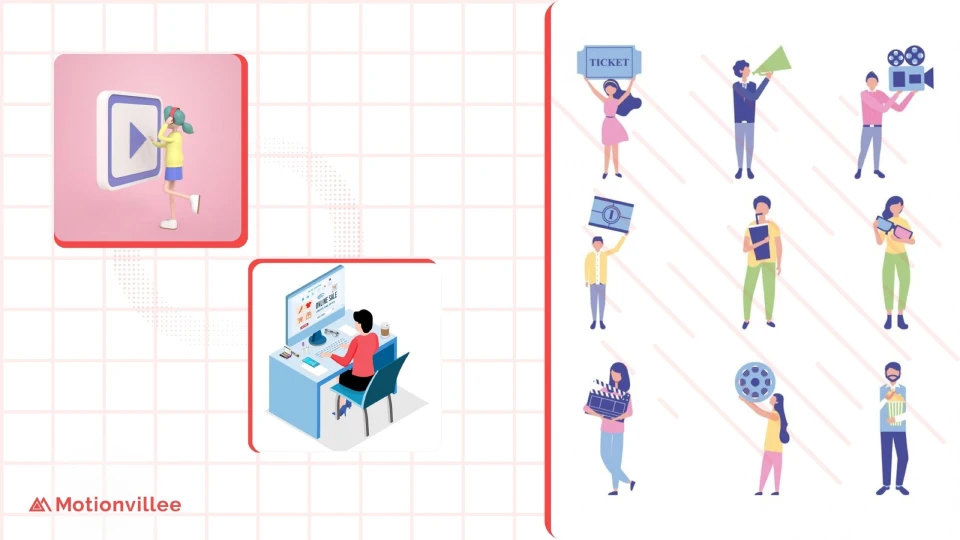
Motion Graphic Animation
This is the most selling animation style for animated explainer videos. It promises user engagement and a good shape to your marketing approach.
A special skill set is required to make these videos with special training in drawing and animation. Every minute detail needs to be taken care of in this style. The movement of small objects and the transition between frames are to be dealt with carefully. This is the reason why motion graphics takes most of the time of the animator compared to the other styles.
Best for: Data visualization, statistical presentations, corporate videos, and financial services
Why it works: Motion graphics excel at transforming dry data into dynamic visual stories. The combination of animated shapes, text, and graphics creates professional content that holds attention while delivering complex information clearly.
2D Animation
Lots of fun, lots of colors, lots of humor, lots of characters and detailed environmental elements, expect all this from a cartoon animation video. These videos are known to fetch a good response and are among the popular choices of those who hold experience in the field.
Best for: Brand storytelling, product explanations, educational content, and character-driven narratives
Key advantages:
- Cost-effective compared to 3D animation
- Faster production timeline
- Wide range of artistic styles available
- Emotional connection through character design
2D animation offers incredible versatility in visual style, from flat modern design to hand-drawn traditional aesthetics. This flexibility makes it adaptable to virtually any brand identity. When deciding between animation approaches, understanding the distinction between 2D explainer videos vs 3D explainer videos helps clarify which format delivers the best value for your specific needs.
Whiteboard Animation
This animation style is all about illustrations and is the simplest 2D animation. It is more of a traditional approach towards animation explainer video. In this style, drawn images are portrayed on a clean white surface explaining the concept sequentially.
With a minimalistic design, this style is most effective as it keeps users engaged. This style is recommended for creating video series as well.
Best for: Educational content, training videos, step-by-step tutorials, and thought leadership
Why audiences love it:
- Creates a classroom learning atmosphere
- Focuses attention on the message without visual distractions
- Builds anticipation as drawings unfold progressively
- Cost-effective production with high engagement rates
The simplicity of whiteboard animation makes complex topics accessible. Viewers follow along naturally as concepts build sequentially, mimicking how a teacher explains ideas on an actual whiteboard. For businesses evaluating format options, comparing whiteboard explainer videos vs talking head videos reveals when each approach serves your messaging goals most effectively.
Kinetic Typography Animation
This style depends heavily on text and numbers along with relevant animation and suitable background music. Kinetic typography leaves a strong impact on the audience minds. It helps you convey your ideas clearly and influence people towards your product of interest.
Best for: Quotes, testimonials, statistics, lyric videos, and text-heavy messages
Production benefits:
- Quick turnaround time
- Low production cost
- Easy to update and modify
- Strong visual impact with minimal elements
Design considerations:
- Font selection establishes tone and personality
- Timing synchronizes with voiceover or music
- Movement patterns guide viewer attention
- Color choices reinforce brand identity
Kinetic typography proves particularly effective for social media content where text-on-screen performs well in sound-off viewing environments. The animated text captures attention while delivering complete messages even without audio.
Cutout Animation
As the name suggests, this style consists of cutout animation characters and objects from a piece of paper. It is very simple in the looks and movement and easy on eyes too. And it engages the audience and conveys the message verbally.
It has a downside risk too as its simplicity can be downright boring and the video might not receive a proper response.
Best for: Children’s content, storytelling, indie projects, and artistic expressions
Distinctive characteristics:
- Nostalgic, handcrafted aesthetic
- Limited but charming movement
- Unique visual identity that stands out
- Works well for specific audience segments
Modern digital cutout animation combines traditional charm with contemporary production efficiency, creating a style that feels both authentic and polished.
Silhouette Animation
In this style, the character shown in the explainer video is in the form of a silhouette. You can spice up the expressions of the character and even use the company’s brand color for the character to leave a better impact.
Best for: Brand teasers, mystery reveals, artistic narratives, and conceptual storytelling
Creative applications:
- Brand color integration maintains identity
- Focus on action and movement rather than details
- Creates intrigue and curiosity
- Versatile across different message types
Silhouette animation offers a sophisticated aesthetic that works particularly well for brands seeking elegant, minimalist visual communication. The style removes distracting details, allowing audiences to focus purely on the message and action.
Icon Animation
Best for: Process explanations, feature highlights, tech products, and user interface demonstrations
Why it works:
- Universally recognizable symbols
- Clean, modern aesthetic
- Scalable across different screen sizes
- Easy to understand across languages
Icon animation simplifies complex systems into digestible visual elements. The familiar symbols help audiences quickly grasp concepts without lengthy explanations, making this style ideal for international audiences and technical products.
3D Animation
A few decades ago who would have thought that objects that appear in the 3D space can be easily moved and rotated? This effect is revolutionary and leaves an impact that stays. This effect requires you to learn to digitally model a character, sculpt it, give it a skeleton which can be moved and manipulated. With 3D animation images, you have a lot of possibilities up your sleeve. You can create TV commercials, full-length movies, short films and what not.
All you need to do is to pose the model at certain frames and the software takes care of the rest.
Best for: Product demonstrations, architectural visualization, medical animations, and high-end brand presentations
Technical advantages:
- Photorealistic rendering capabilities
- 360-degree product views
- Complex camera movements
- Internal mechanism visualization
Production considerations:
- Higher production costs
- Longer timelines
- Requires specialized expertise
- Delivers premium visual quality
3D animation creates immersive experiences that showcase products with unparalleled detail and realism. The depth and dimension capture attention and leave lasting impressions, particularly valuable for premium brands and complex products requiring detailed visualization.
Isometric Animation Style
It can be defined in less than a sentence, this style is legible and geometric. It is smooth and clear to deliver complex ideas with simple illustrations like infographic animation style. At Motionvillee, we take pride in isometric deliverables and quality that we provide with details in the moving parts. With a varied animation library, we can deliver the best meaning to the underlying concept. Let our rockets, cars, and sharks save your day.
Best for: Tech products, system architectures, city planning, and process flows
Visual benefits:
- Maintains consistency across all angles
- Creates depth without perspective distortion
- Modern, clean aesthetic
- Easy to understand complex systems
Isometric style has gained massive popularity in tech and SaaS industries. The geometric precision communicates professionalism while the unique perspective makes technical concepts more approachable and engaging.
Bonus: Stop Motion Animation
This style is the simplest yet the most tedious among all the animation style. It’s simple, draw a character, take photos, change an element in that photo, then take another. Compile all the pictures and you have your video.
The reason why it is tedious is it goes frame by frame. Also, for a video of a few seconds, you might require a hundred pictures. Good luck with that!
Best for: Artistic projects, product launches, craft brands, and nostalgic storytelling
Production reality:
- Extremely time-intensive process
- Requires physical materials and space
- Challenging to modify after shooting
- Creates unique, tactile aesthetic
Despite production challenges, stop motion delivers an authentic, handcrafted feel that audiences find charming and memorable. Major brands occasionally use stop motion for special campaigns precisely because its rarity makes it stand out.
Bonus: Screen Capture
This style is recommended if the underlying products are a website or an app. This is a step-by-step explainer video that shows how to use the given website or the mobile app, created with the help of animated screen capture of the website and the app.
This tutorial style of explainer videos improves the customer’s experience and maintains steady revenues along with educating the user.
Best for: Software tutorials, app onboarding, feature demonstrations, and user guides
Implementation tips:
- Add animated callouts to highlight key elements
- Include cursor animations for clarity
- Layer voiceover explaining each step
- Keep pacing appropriate for viewer comprehension
Screen capture videos reduce support tickets by proactively educating users on product functionality. The direct demonstration removes ambiguity and builds user confidence.
Choosing Your Animation Style: Strategic Considerations
With nine distinct animation styles available, selecting the right approach requires strategic thinking beyond visual preferences.
Consider these factors:
- Budget Constraints: Motion graphics and 2D animation typically offer the best value, while 3D and stop motion require larger investments.
- Timeline Requirements: Icon animation and kinetic typography produce quickly, whereas 3D and stop motion demand extended timelines.
- Message Complexity: Technical products benefit from isometric or 3D visualization, while conceptual ideas work well with 2D or whiteboard styles.
- Brand Identity: Your chosen style should align with existing brand aesthetics and audience expectations.
- Platform Distribution: Social media content often performs better with bold, simple styles like kinetic typography, while website content can support more detailed approaches.
The decision between various animation approaches connects to broader format questions. Understanding which one is better for your brand live action or animated explainer provides context for when animation itself is the right choice versus live-action alternatives.
Over to you…
We hope that this blog post assisted you in understanding the differences between the popular animation styles. Animation offers limitless creative possibilities for brands seeking engaging, memorable content that drives results.
Each style brings unique strengths to your marketing strategy. The key lies in matching animation approach to message purpose, audience preference, and business objectives. Whether you choose the simplicity of whiteboard animation, the sophistication of 3D, or the modern appeal of isometric design, your decision should serve your strategic goals.
If you wish to explore more, follow us on social media for recent updates in the animation industry.
Ready to bring your message to life with professional animated explainer video production services? Our team specializes in all animation styles, helping you select and execute the perfect format for your brand. Reach out today and we’ll get back to you shortly to discuss how animation can transform your marketing results.