
What Is B2B Video Marketing and Why Should You Care?
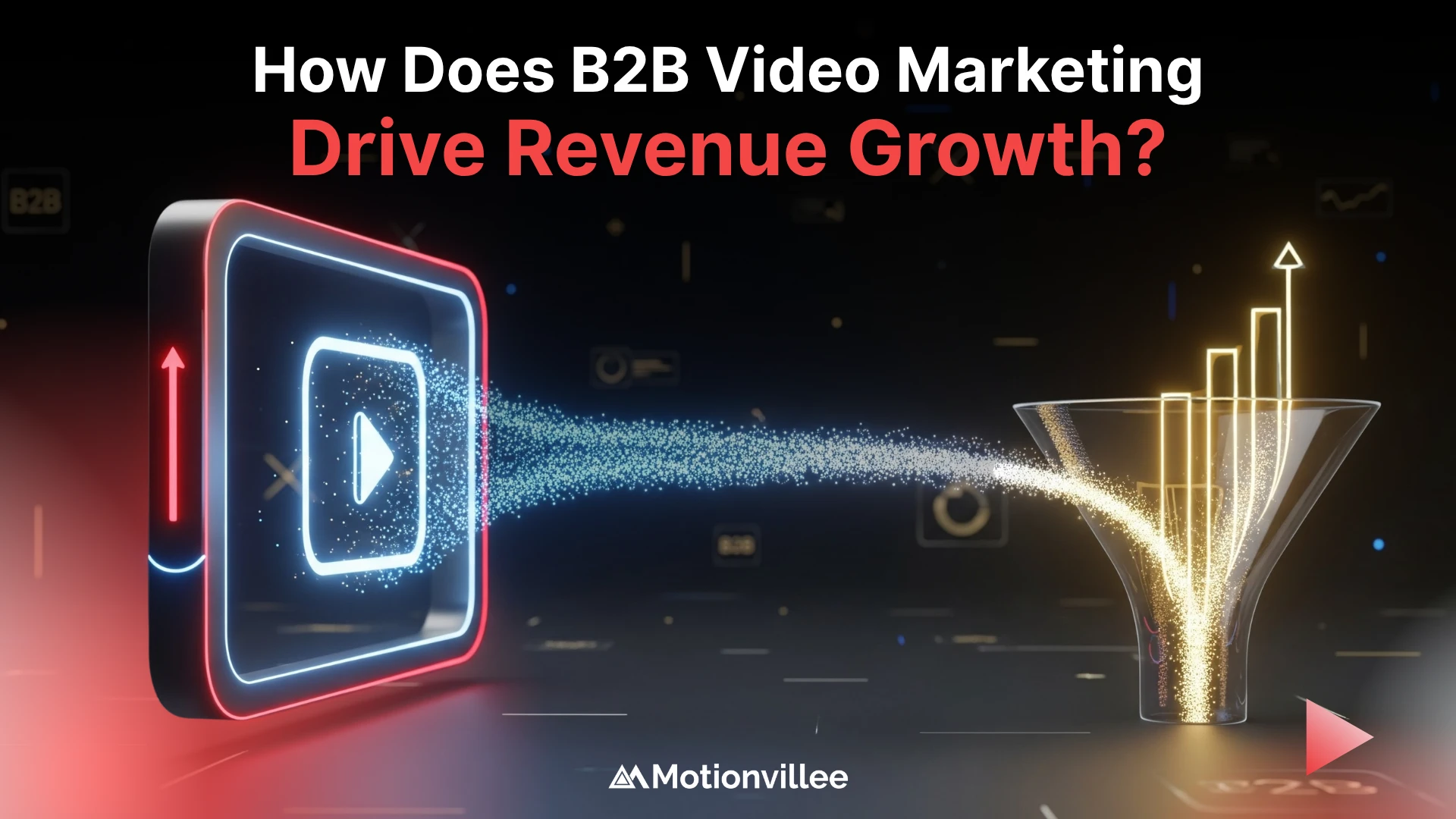
B2B video marketing is a strategic revenue channel that simplifies complex products, builds trust, and accelerates the buyer journey. Most B2B companies underinvest in video despite data showing it drives 3-5x more qualified leads than text.
Why video matters to your growth:
- Buyers expect to see your product in action before scheduling demos
- Video answers complex questions in 30 seconds instead of 500-word explanations
- Your competition is already using video, and gaining market share
B2B video marketing ROI compounds quickly. Better conversion rates feed more deals into your pipeline. Shorter sales cycles mean more cycles per rep per year. The sooner you start, the sooner you gain competitive advantage.
Why Are Your Competitors Gaining More Traction Despite Having Weaker Products?
Video isn’t optional anymore, buyers expect to see your product in action, and if competitors use video while you don’t, you’re losing deals. Here’s what’s happening in your market right now:
The competitive gap:
- Prospect lands on competitor’s site
- Finds a clear, 90-second product demo
- Immediately understands features and ROI
- Moves forward with evaluation
What prospects see on your site instead:
- 2,000-word case study
- Blog post about your company
- Static product screenshots
Result: They go back to your competitor.
B2B video marketing strategy changes buyer perception. When prospects see video adoption from competitors, they assume innovation and confidence. Without it, you signal you’re resource-constrained or not serious about helping them decide.
The cost compounds monthly. Every prospect watching a competitor demo instead of yours is a lost deal. By the time you start, their advantage is entrenched.
How Do B2B Buyers Actually Make Purchasing Decisions Today?
Modern B2B buyers consume video 3x more than any other content type, they skip PDFs and case studies to watch video. This is how the buyer journey actually works:
Awareness stage (Prospect has a problem):
- Watches educational videos
- Skips blog posts entirely
- Searches for industry trends
Consideration stage (Prospect compares solutions):
- Watches product demonstrations
- Reviews comparison videos
- Looks for SaaS explainer videos showing specific use cases
- Skips generic marketing language
Decision stage (Prospect chooses vendor):
- Watches client testimonials
- Reviews case study videos
- Trusts video interviews more than written case studies
B2B buyer behavior has shifted to video because it’s efficient. Your buyers are time-pressed, managing multiple priorities. Video respects their attention and delivers information faster than text. This pattern holds across SaaS, cybersecurity, fintech, and every B2B industry.
What Specific Results Can B2B Video Marketing Deliver?
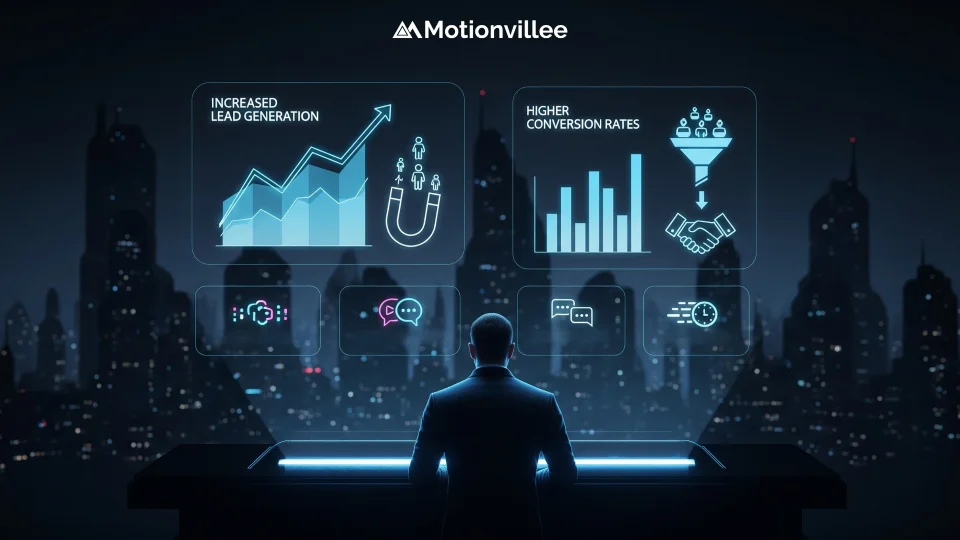
B2B video marketing drives measurable outcomes: higher demo rates, shorter sales cycles, reduced acquisition costs, and improved page performance. These are concrete metrics, not brand awareness claims.
Key results companies see:
- 34% increase in demo bookings
- 15-20% reduction in sales cycles
- 25-80% higher landing page conversions
- Reduced customer acquisition cost (sales team spends less time on discovery)
How this translates to revenue:
- More qualified meetings = more pipeline
- Faster evaluation = faster cash flow
- Higher conversion rates = more deals closed per quarter
Video marketing ROI compounds over time. Better conversions feed more deals. Shorter cycles mean more closed deals per rep annually. This isn’t a one-time gain. It’s a sustainable growth multiplier.
What Types of B2B Videos Actually Drive Revenue?
Different video types serve different funnel stages, and strategic use of each multiplies ROI. One video won’t move the needle. Packages do.
Awareness-stage videos:
- Explainer videos
- Educational content
- Problem-focused storytelling
- Goal: Answer “Why should I care?”
Consideration-stage videos:
- Product demos
- How-to videos
- Feature walkthroughs
- Goal: Show your solution solving real problems
Decision-stage videos:
- Client testimonials
- Case study videos
- ROI proof videos
- Goal: Build confidence in your vendor choice
B2B marketing videos work because they’re distributed strategically. A complete package includes all three stages. One-off videos generate noise. Integrated packages generate revenue. Companies using multiple video types across their funnel see 2-3x higher engagement and faster pipeline progression.
With a product demo video strategy, prospects see exactly how your solution works before calling your team.
Why Do Most B2B Companies Fail to Get ROI From Video?
Most B2B companies make the same mistakes: treating video as content instead of a revenue tool, creating generic videos instead of SaaS-specific ones, and distributing single videos instead of packages. These kill ROI before you hit record.
Common pitfalls:
1. Creating one video and expecting results
- That’s hoping, not strategy
- Real B2B video marketing strategy requires multiple assets aligned to your funnel
- Awareness, consideration, and decision videos must work together
2. Making generic videos instead of SaaS-specific ones
- Generic corporate videos about teamwork sound nice
- They don’t drive leads for your SaaS product
- Your video must address specific buyer problems and show your product solving them
3. Keeping videos on your website only
- A brilliant demo reaching hundreds is wasted potential
- Distributed across LinkedIn, email, sales enablement, and paid ads, it reaches thousands
- Sales training videos in an internal folder never impact market position
4. Measuring views instead of conversions
- Vanity metrics feel good but don’t fund the company
- Real B2B video marketing best practices focus on demos booked and deals closed
The fix: Stop creating random videos. Build strategic packages aligned to your funnel. Focus on SaaS-specific storytelling. Distribute everywhere your buyer exists. Measure what matters: conversions.
How Should You Structure a B2B Video Marketing Strategy That Actually Works?
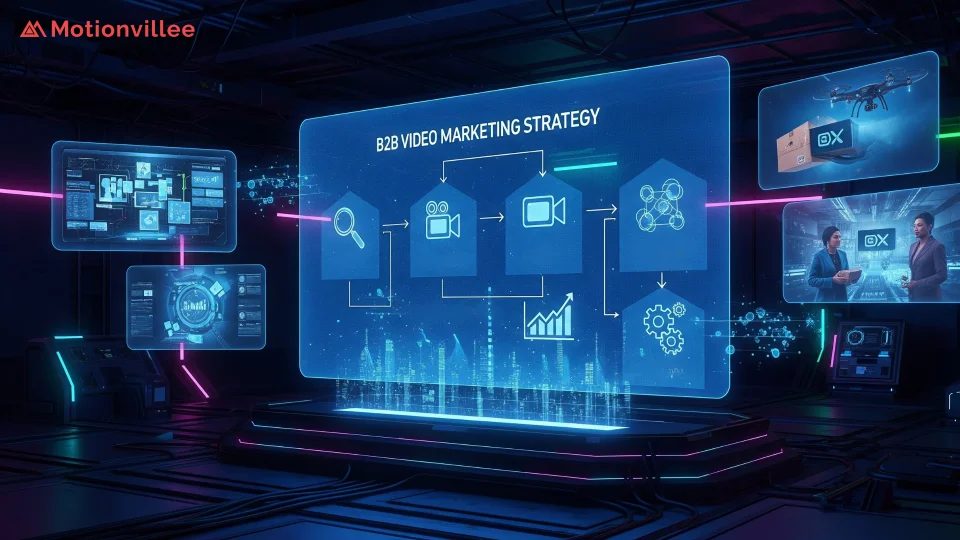
Effective B2B video marketing strategy requires three things: funnel alignment, multiple video types, and strategic distribution. Here’s how to build it:
1: Map your buyer journey
- Identify your three stages: awareness, consideration, decision
- Write the questions your buyers ask at each stage
- Awareness: “Do I have this problem?”
- Consideration: “Who solves this best?”
- Decision: “Can I trust this vendor?”
2: Create videos for each question
- Awareness videos address the problem
- Consideration videos show your solution
- Decision videos provide proof
- Build as a package, not random videos
3: Build a distribution plan
- Website and landing pages
- Paid ad video content on LinkedIn and Google
- Email campaigns
- Sales enablement systems
- Proposal templates
4: Document and measure
- Map each buyer question to a video type
- Define success metrics tied to business outcomes
- Track demos booked, not just video views
- Measure pipeline impact
Think of your B2B video marketing strategy like your sales process. You don’t expect one cold call to close a deal. Don’t expect one video to drive all revenue. The combination of touchpoints moves prospects forward.
What’s the First Step to Building Your B2B Video Marketing Program?
Start by auditing your current funnel and identifying where video is missing, then build a strategic package for your buyer journey. Follow these steps:
Step 1: Audit your current funnel
- Review your website, landing pages, email campaigns, sales materials
- Where does video exist today?
- Where are the gaps?
- Most companies find scattered videos with no funnel connection
Step 2: Identify your biggest gap
- What’s your most pressing buyer question?
- Where do prospects get stuck in your sales process?
- Which funnel stage needs video most?
Step 3: Build your first package
- Start with 3-5 videos across stages
- Align to specific buyer questions
- Plan distribution across channels
- Don’t follow generic trends, build for your funnel
Step 4: Tie it to real business goals
- Your goal isn’t “get more video views”
- Your goal is “reduce sales cycle by 15%” or “increase demo bookings by 25%”
- This clarity keeps video strategy focused on what matters: revenue growth
Ready to move beyond hoping video works to building a strategy that delivers measurable results? The first step is scheduling a conversation about where your funnel has gaps and how video can fill them.
Schedule a call with Motionvillee to explore how B2B video marketing can accelerate your revenue.