
Startup Explainer Video Strategy: How to Launch with $0 Paid Ads Budget
Startup budgets don’t include video advertising spend. But explainer videos might be your highest-leverage marketing asset. This guide reveals how to create and distribute startup explainer videos entirely through organic channels, community partnerships, and strategic founder marketing without paying for a single ad impression.
The Bootstrap Video Imperative
Startups need explainer videos more than established companies because prospects don’t know who you are, what you do, or why they should care unless you show them clearly in under 3 minutes.
Established companies have brand recognition. They’ve spent years building awareness. Prospects know Salesforce, Stripe, Figma. When these companies release a video, audiences already have context.
Startups have no brand equity. Most prospects have never heard of you. Your first video must answer three fundamental questions: What is this? Why does it matter? Why should I care? A startup explainer video is your foundation for everything else.
Why Explainer Videos Matter More for Startups Than Established Companies
Startup explainer videos overcome the awareness deficit by quickly establishing product clarity, positioning, and credibility that would take months to build through other marketing channels.
A prospect landing on your website has 3 seconds to decide whether to stay. Most leave because they don’t immediately understand what you do. An explainer video on your homepage eliminates this confusion and dramatically increases time-on-site.
Explainer videos also serve multiple functions simultaneously. They educate prospects, build credibility through production quality, reduce support burden by answering common questions, and create social proof when embedded across distribution channels.
For startups operating on limited budgets, a single explainer video is force multiplication. It works harder than individual blog posts, feature emails, or sales conversations because it does all three simultaneously.
The Paid Advertising Trap for Early-Stage Companies
Most startups waste early capital on paid video ads before building organic channels that scale sustainably, leaving insufficient budget for the ads to actually work.
The startup instinct is to create a video and immediately boost it on Facebook or LinkedIn. This seems efficient. You’re putting your message in front of audiences immediately. The problem is paid acquisition costs drain cash before product-market fit is achieved.
Early-stage startups have limited runway. Capital spent on ads is capital not available for product development, hiring, or operational expenses. Organic distribution requires time investment but minimal financial cost.
The strategic choice is clear: Invest early in organic channels. Build sustainable distribution first. When you have product-market fit and runway, add paid amplification to accelerate what’s already working organically.
Organic Distribution: The Unfair Advantage Nobody Talks About
Startups with founders willing to personally market their products gain unfair distribution advantage over companies relying entirely on marketing budgets and paid channels.
Founder-led distribution is underutilized because it requires founder time and personal vulnerability. Most founders resist sharing their work publicly or promoting their own product. This hesitation leaves untapped distribution potential.
The founders willing to personally promote their products through social media, community participation, and relationship leverage get disproportionate organic distribution. This advantage compounds over time as audience and credibility grow.
Strategic Foundation: Defining Your Video’s Core Mission
A startup explainer video must have a single, specific mission: educate prospects about a specific problem your solution solves or a specific audience segment you serve.
One common mistake is trying to explain everything in one video. Your product has 20 features. Your market has multiple use cases. One video can’t cover everything. Trying leads to confusion.
Instead, define your video’s specific mission. Maybe it’s “show SaaS CFOs how we reduce data entry time by 40 hours monthly.” Maybe it’s “explain to product managers why they need user research tools.” Specific mission beats comprehensive explanation.
Identifying Your Single Most Important Message
Ask: If prospects only remember one thing about our product after watching this video, what should it be? That’s your core message. Build the entire video around communicating that one idea clearly.
Most startup pitches try to communicate too much. “We’re an AI-powered platform that uses machine learning to automate workflows while integrating with existing systems and providing real-time collaboration.” Prospects don’t remember this. They’re confused.
Simplify to your core value. “We eliminate manual data entry so your team can focus on strategy.” This is memorable. This compels action. This is your single most important message.
Audience Precision Over Broad Appeal
Avoid generic positioning that appeals to everyone. Instead, target a specific audience segment. “For SaaS founders” is better than “for businesses.” “For marketing teams managing content calendars” is better than “for marketers.”
Precision creates relatability. When prospects see themselves specifically mentioned, they pay attention. Broad positioning creates distance. Prospects think “this isn’t specifically for me” and tune out.
Production on a Shoestring: Quality Without Capital
Startup explainer videos don’t need expensive production. They need clear messaging, professional voiceover, and simple animation or screen recording combined effectively.
The Minimum Viable Production Approach
Minimum viable explainer video includes: clear script focused on your single message, simple 2D animation or screen recordings showing the product, professional voiceover talent (crucial for credibility), and background music. This combination covers 80% of what makes videos effective.
Skip: Hollywood production quality, complicated 3D animation, multiple camera angles, elaborate motion graphics, and lengthy editing. These add cost without proportional benefit for startups.
Focus instead on message clarity and professional polish. A simple animated video with clear messaging and professional voiceover outperforms a beautiful video with confusing messaging every time.
Tools and Resources Under $100
- Script Writing: Use AI writing tools (ChatGPT, Claude) for initial drafts. Cost: $0-20/month for premium tier. Refine the script yourself based on your positioning.
- Voiceover: Fiverr or Upwork for professional voiceovers. Cost: $50-150 for a 2-minute voiceover. Quality is professional. Turnaround is 2-3 days.
- Animation: Animaker or Doodly for simple 2D animation. Cost: $0-50 for basic templates. Existing templates reduce production time from weeks to days.
- Screen Recording: ScreenFlow (Mac) or Camtasia (Windows/Mac). Cost: $99 one-time or $129/year. Record your product interface for demo portions of videos.
- Music and Sound: Epidemic Sound or Artlist for royalty-free music. Cost: $15-20/month. Thousands of tracks available. No licensing headaches.
- Video Editing: DaVinci Resolve (free version is powerful) or CapCut (free mobile). Cost: $0. Professional editing without subscription costs.
When to DIY vs When to Trade Equity
If you have video production skills or can learn them, DIY production saves money. The time investment is significant but cash outlay is minimal.
If video production isn’t your skill and timeline is critical, consider trading small equity grants to video producers in exchange for discounted work. Some video professionals work with startups on equity-plus-smaller-fee arrangements. This preserves cash while getting professional results.
Most startups should hire voiceover professionals even if they DIY animation or editing. Voiceover is the most impactful element on credibility. Professional voiceover is worth the expense.
The 5 Distribution Pillars for Zero-Budget Launches
Startup explainer video distribution relies on five pillars: product integration, founder social, community participation, strategic partnerships, and press/influencer outreach.
Pillar 1: Product-Led Video Integration
Embed your explainer video directly in your product and communication channels so prospects encounter it in moments of high intent rather than interrupting them with ads.
Your website homepage should feature the explainer video above the fold. Prospects landing on your site should immediately see your video before scrolling. Make it easy for them to understand what you do without reading.
Embed the video in your onboarding flow for new users. Many users start using your product without fully understanding its capabilities. An explainer video in week one of their journey shows advanced features they don’t realize exist.
Email signature placement: Include a link to your explainer video in your email signature. “Questions about what we do? Watch our 2-minute overview.” This puts your video in every outbound email without being pushy.
Embed in sales outreach emails. When you send introductory emails to prospects, include a link to your explainer video. “Before we talk, watch this 2-minute overview of our approach. I’ll follow up Friday to discuss your situation.”
Pillar 2: Founder-Led Social Distribution
Founders personally distributing the explainer video through LinkedIn, Twitter, and other platforms amplify reach dramatically through their personal networks and follower bases.
LinkedIn Personal Brand Amplification
Share your explainer video on LinkedIn with personal context about why you created it. “We spent weeks defining our core message. Here’s the 2-minute video that captures it.” Authenticity drives engagement.
LinkedIn’s algorithm prioritizes videos watched on the platform. Post your video natively on LinkedIn rather than linking to YouTube. Native videos get 10x more visibility than external links.
Encourage your entire team to share the video from their personal accounts. Their networks see it through personal connection rather than company account. Personal shares generate higher engagement and trust.
Twitter Thread Storytelling with Video
Create a Twitter thread telling the story behind your explainer video. “Here’s the story of how we created our explainer video (thread). We tested 5 different messages. Here’s what won.” Then embed the video in the thread.
Thread storytelling creates engagement before people see the video. By the time they click to watch, they’re already invested in your story. This increases completion rates beyond standard video sharing.
The Reddit Contribution Strategy
Find relevant subreddits where your target audience hangs out. r/ProductManagement for product people. r/SaaS for SaaS founders. r/Entrepreneurship for startup founders. Participate authentically in these communities.
When genuinely relevant to a discussion, share your video. “Someone asked how to simplify data workflows. We created this explainer video showing our approach. Might be helpful.” Context matters. Pure self-promotion gets deleted.
Provide value first. Answer questions thoughtfully. Build credibility. Only when you’re an established community contributor does sharing your own work feel natural rather than spammy.
Pillar 3: Community Infiltration and Value Exchange
Strategic participation in online communities where your audience congregates builds credibility and creates natural opportunities to share your explainer video with relevant people.
Identifying High-Value Communities
Where does your target audience spend time? Slack communities? Discord servers? Specialized forums? Facebook groups? Find the 3-5 communities with highest concentration of your ideal customers.
Join as a genuine member first. Lurk. Understand the culture. Learn what’s valued. Learn what violates community norms. Most communities hate overt self-promotion but welcome helpful participation.
Non-Promotional Video Sharing Tactics
Share your video only when someone explicitly asks for solutions to the problem your video addresses. A community member says “We’re struggling with data quality issues. How are you handling this?” That’s your moment.
Provide context around the video. “We struggled with this too. Here’s the approach we documented. You might find this helpful.” The frame is helpfulness, not promotion.
Engage with comments on your video within the community. If someone watches and asks questions, answer directly in the thread. This builds credibility and shows you’re engaged, not just dropping links.
Pillar 4: Strategic Partnership Leverage
Partnerships with complementary startups create mutual distribution channels where both companies promote each other’s content to relevant audiences at no cost.
Co-Marketing with Complementary Startups
Identify 3-5 startups solving adjacent but non-competing problems. A scheduling tool partners with a note-taking tool. A video tool partners with a graphic design tool. Complementary audiences, non-competing solutions.
Propose partnership: “We’d like to share each other’s explainer videos with our audiences. Your video goes in our resource center. Our video goes in yours. We cross-promote on social.” Mutual benefit with no cost.
Create co-marketing content. “How scheduling and note-taking work together for productivity.” Both tools feature in the content. Both audiences see both tools. Collaboration amplifies reach for everyone.
Integration Partner Cross-Promotion
Integrate your product with platforms your customers already use. When you integrate with Slack, Zapier, or other major platforms, ask about cross-promotion opportunities. Many platforms feature interesting integrations in their newsletters and documentation.
Being featured in a major platform’s integration marketplace creates distribution without cost. Thousands of their users see your product and your explainer video through their recommendation.
Pillar 5: Press and Influencer Outreach
Journalists and industry influencers share compelling stories and content frequently, creating distribution leverage when your explainer video has a newsworthy angle.
Crafting the Newsworthy Angle
Your explainer video alone isn’t newsworthy. But the story behind it might be. “Startup founders ditched traditional marketing. Here’s how they launched entirely through organic channels.” That’s a story.
Or: “We discovered one positioning message resonated 10x better than our original message. Here’s how we learned that.” That’s a learning worth sharing.
Craft an angle that’s about insight, learning, or unique approach, not about promoting your product. Journalists and influencers care about interesting stories, not product promotions.
Micro-Influencer Collaboration Models
Micro-influencers with 10k-100k followers often have more engaged audiences than larger influencers. They’re also more responsive to collaboration requests from startups.
Reach out with specific collaboration proposal: “We think our explainer video would resonate with your audience. Would you be interested in featuring it?” Some will if the fit is good.
Consider compensation in product access rather than cash. “Free lifetime access to our platform in exchange for sharing our video with your audience.” This preserves cash while getting influencer distribution.
Content Atomization: One Video, Infinite Touchpoints
Maximize return on video production by extracting multiple content assets from one explainer video, creating multiple distribution touchpoints and channels.
Extracting Quote Cards and Audiograms
Identify the most compelling statements in your video script. Convert them to quote cards with simple graphics. “Manual data entry wastes 40 hours monthly. We eliminate it.” Post quote card on social media with video link.
Create audiograms of powerful statements from your voiceover. Share audio clips on Twitter, TikTok, and Instagram Stories. Audiograms drive curiosity that leads to full video viewing.
Blog Embedding and SEO Optimization
Embed your explainer video in blog posts about related topics. Blog post about “data entry best practices” should embed your video. Blog post about “SaaS workflow optimization” should feature your video prominently.
Write the blog post content first. Then embed the video where it’s most relevant. This serves two functions: organic search traffic to the blog drives video views, and video completion time signals to search engines that content is engaging.
Create blog posts deconstructing your explainer video. “Here’s how we structured our explainer video. Here’s why we chose this message. And here’s what we learned.” Behind-the-scenes content drives traffic and video distribution simultaneously.
Viral Mechanics: Engineering Shareability
Explainer videos that get shared organically contain psychological triggers that make viewers want to forward them to peers, requiring intentional design for shareability.
Psychological Triggers That Drive Forwarding
Surprise: “We discovered something unexpected about how teams actually work.” Surprises trigger share instinct. “You won’t believe what we found.” Creates curiosity others want to spread.
Relevance: “This changed how I think about data workflows.” Relevance drives sharing. “Everyone in our team needs to see this.” Peers share content directly relevant to their situation.
Validation: “This explains what I’ve been thinking but couldn’t articulate.” Validation drives sharing. Content that validates someone’s perspective gets spread to others with similar perspectives.
The Hook-Value-Surprise Formula
Hook (0-5 seconds): “You’re probably wasting 40 hours monthly on work that can be automated.” Immediate relevance hooks attention.
Value (5-120 seconds): Explain the problem, position your solution, show proof. Deliver genuine value in understanding or insight. Viewers stay engaged because they’re learning something useful.
Surprise (final 10 seconds): End with unexpected insight or implication. “Most teams don’t realize this approach exists.” Or show unexpected impact. Surprise ending makes the video memorable and shareable.
Platform-Specific Optimization Tactics
Different platforms require different video formats, lengths, and optimization approaches to maximize visibility and engagement on each.
YouTube SEO for Passive Discovery
Title your video to include your core keyword. “SaaS Product Demo Video: How [Your Company] Reduces Data Entry Time.” Include target keyword naturally without stuffing.
Write detailed description including transcript, links to your website, and calls-to-action. YouTube uses descriptions for search ranking. More detailed description means better searchability.
Create a custom thumbnail with your logo and compelling visual. Custom thumbnails get 30% higher click-through rates than auto-generated ones. Make it visually distinct and clickable.
LinkedIn Native Video Algorithm Hacking
Post video natively on LinkedIn, not as YouTube link. Native videos get 5x more reach. LinkedIn’s algorithm prioritizes engagement and views on the platform itself.
Post video from founder account with personal context. Founder videos get more distribution than company account videos. Humanize the post with personal narrative around why this video matters.
Encourage comments by asking a question. “What surprised you most about our approach?” Questions drive comment engagement, and comments signal to LinkedIn algorithm that content is engaging.
TikTok and Instagram Reels for B2C Startups
Create short 15-30 second versions of your explainer for TikTok and Instagram Reels. Full explainer lives on YouTube. Short clips hook TikTok audiences and drive to full version.
Leverage trending sounds and music within TikTok culture. Videos with trending audio get 10x more reach than videos using generic music. Adapt your content to platform-specific trends without losing your message.
Post consistently on short-form platforms. Daily if possible. Algorithm favors consistent creators. Sporadic posting gets buried. Consistency builds algorithm favor and audience growth.
Measuring Success Without Analytics Paralysis
Startup explainer video success is measured by three metrics: viewer completion rate, demo request generation, and customer acquisition cost per video source, not vanity metrics like view count.
The Three Metrics That Actually Matter
Metric 1: Completion Rate. What percentage of viewers watch the entire video? If 70%+ of viewers complete the video, your message resonates. If completion drops below 50%, positioning needs refinement. Track completion rates per channel.
Metric 2: Conversion to Next Step. How many viewers take action after watching? Sign up for trial? Request demo? Register for webinar? Conversion rate matters more than views. 100 viewers with 10% conversion (10 conversions) beats 1,000 viewers with 1% conversion (10 conversions) with different efficiency implications.
Metric 3: Customer Acquisition Cost. Of customers you acquire, how many came from video sources? If video sources cost $500 per customer and other sources cost $2,000, video is your most efficient channel. Track attribution rigorously.
Qualitative Signals Over Vanity Numbers
Don’t celebrate view counts. Celebrate meaningful signals. “Three prospects mentioned our video during sales calls” is more valuable than “5,000 views.” Engagement quality beats reach quantity.
Pay attention to customer feedback mentioning your video. “Your video convinced me to try the product” is qualitative proof that video works. This feedback matters more than aggregate metrics.
Iteration Protocol: Rapid Testing on Zero Budget
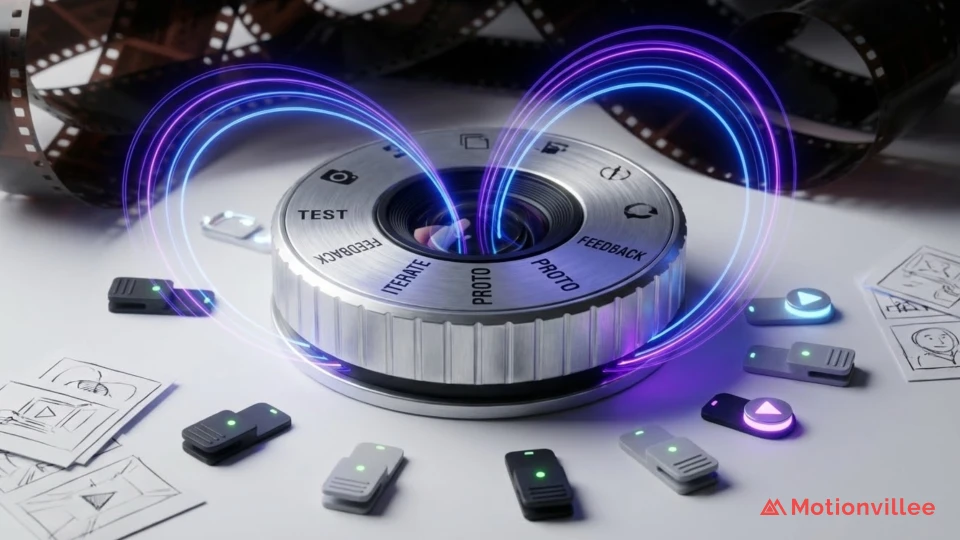
Test different explainer video versions across different audience segments, measure what works, and iterate rapidly using learnings from each version.
Create variation on messaging. First version emphasizes time savings. Second version emphasizes error reduction. Third emphasizes cost savings. Test each message with small segment of audience.
Measure completion rates and conversion rates for each. The message that drives highest completion and conversion is your winner. Double down on that message for full distribution.
Test different video lengths. Full 3-minute version performs differently than 90-second version on different platforms. Short version might drive more YouTube views. Long version might drive more comprehensive understanding and higher conversion.
Test distribution channels. Your video might perform great on LinkedIn but mediocre on Twitter. Test across multiple channels with small audiences first. Identify highest-performing channels. Concentrate distribution there.
Common Mistakes That Waste Startup Resources
Most startups waste early video efforts on mistakes that prevent distribution scaling and organic reach, leaving videos underperforming relative to production investment.
- Mistake 1: Trying to Explain Everything. Creating a 5-minute video covering all features and use cases. One message beats comprehensive explanation. Focus on single most important message.
- Mistake 2: Ignoring Distribution Planning. Creating excellent video without planning how to distribute it. Distribution strategy matters as much as video quality. Plan before producing.
- Mistake 3: Founder Avoidance. Creating video but not having founder promote it personally. Founder distribution is most powerful organic channel. Founders must participate.
- Mistake 4: Platform Misalignment. Creating video optimized for YouTube and posting on TikTok. Different platforms require different formats. Optimize for each platform where you distribute.
- Mistake 5: Skipping Testing. Producing one version and committing fully without testing messaging variations. Test before scaling. Small testing investment prevents large-scale mistakes.
- Mistake 6: Analytics Obsession. Chasing vanity metrics while ignoring conversion and CAC. View count tells you nothing. Conversion rate and customer acquisition cost tell you everything.
- Mistake 7: Inconsistent Distribution. Sharing video once then assuming it will spread. Consistency wins. Share across channels repeatedly. Different audiences see it at different times.
- Mistake 8: No Clear Call-to-Action. Creating great video but ending without clear next step. Every version needs specific CTA. “Visit our website,” “Sign up for trial,” “Schedule demo.” Clarity drives action.
Timeline: 90-Day Launch Roadmap
A startup can take an explainer video from concept to distributed across all major channels in 90 days on zero budget, following a specific sequence of activities.
Days 1-7: Strategy and Script. Define your single most important message. Identify target audience. Write initial script. Get feedback from team and early customers. Refine based on feedback.
Days 8-14: Production Planning. Decide in-house vs outsourced. Identify voiceover talent and book. Source music and animation tools. Create storyboard or visual plan.
Days 15-35: Production. Record voiceover. Create animation or screen recordings. Edit video. Add music. Create multiple versions (full version, 90-second version, 30-second version). Get stakeholder approval.
Days 36-42: Asset Extraction. Create quote cards. Extract audiograms. Create blog post about video. Write social media captions. Prepare for multi-channel distribution.
Days 43-60: Organic Channel Launch. Post video on YouTube with SEO optimization. Post natively on LinkedIn. Share on Twitter. Distribute to relevant Reddit communities. Share in Slack communities. Ask for team shares.
Days 61-75: Partnership Distribution. Reach out to complementary startups for cross-promotion. Contact industry influencers with newsworthiness angle. Pitch story to relevant journalists. Ask integration partners to feature.
Days 76-90: Measurement and Iteration. Analyze completion rates, conversion rates, and CAC. Identify top-performing versions and channels. Create second-generation video based on learnings. Plan distribution for updated version.
From Launch to Sustainable Distribution
A startup explainer video created on zero budget can generate customer acquisition at 50-75% lower cost than paid channels, but only if distribution strategy matches the effort invested in production.
The first video establishes foundation. Second video expands to different audience segment or different message. Third video deepens positioning in proven channel. Over 12 months, you build sustainable video distribution machine without paid advertising.
The advantage goes to founders willing to personally promote their work, engage in communities authentically, and iterate based on performance data. Technical execution matters less than strategic distribution and consistent amplification.
At Motionvillee, we help startups create explainer videos optimized for organic distribution. We understand bootstrap constraints. We create videos that perform on zero budget through strategic positioning, production efficiency, and distribution guidance. If you’re a startup ready to build explainer video strategy without paid ads, schedule a consultation to discuss your approach and launch timeline.