
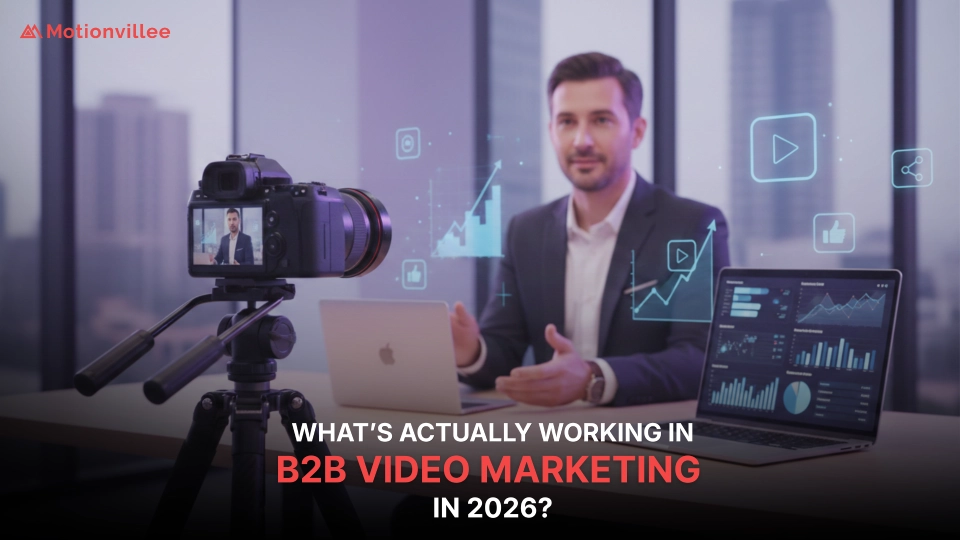
What’s Actually Working in B2B Video Marketing in 2026?
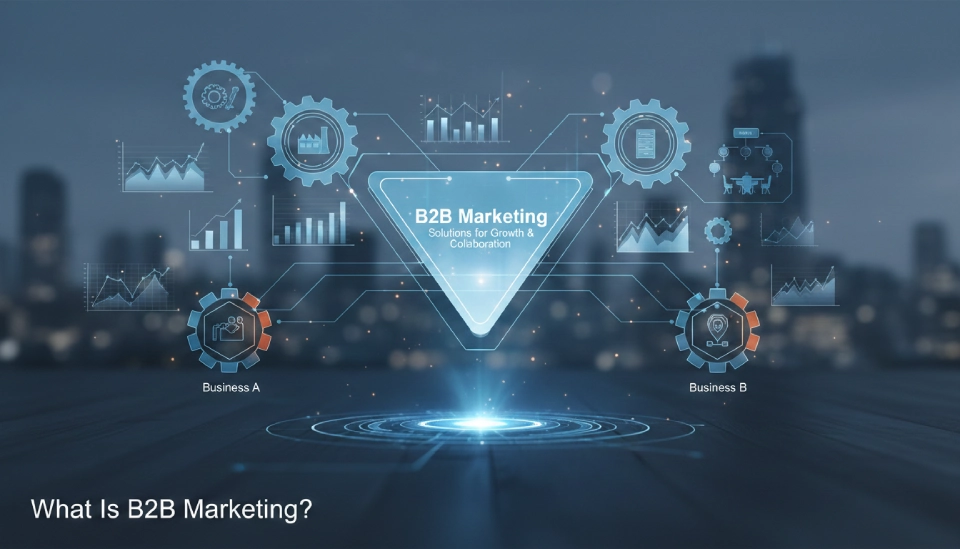
What Is B2B Marketing?
B2B (Business-to-Business) marketing refers to the strategies and tactics companies use to sell products or services to other businesses rather than individual consumers.
Unlike B2C marketing, which focuses on broad appeal and emotional triggers, B2B marketing emphasizes building relationships, demonstrating ROI, and solving specific business problems.
It often involves longer sales cycles, multiple decision-makers, and content-driven approaches such as case studies, whitepapers, webinars, and now, video, to educate and influence potential buyers at every stage of the funnel.
What’s happening currently in B2B Marketing?
B2B video marketing in 2026 looks nothing like it did even two years ago.
What used to be a brand awareness play is now a full funnel revenue engine. But here’s the reality: simply producing more video isn’t what’s working.
What’s working is strategic distribution, personalization, smarter formats, and measurable pipeline impact.
If you’re planning your video roadmap this year, here’s what’s genuinely driving results.
The Shift: From “We Need More Videos” to “We Need Smarter Videos”
The biggest change in 2026 isn’t the format, it’s intent.
Marketing leaders are no longer asking how many videos were produced. They’re asking how many deals were influenced.
Video is now embedded across:
- Awareness campaigns
- Mid funnel nurturing
- Sales enablement
- Customer onboarding
- Retention and expansion
And this shift has forced teams to rethink format and structure,especially explainer content. Brands that understand how to structure high-converting explainer formats are out performing generic product demos.
Because format clarity directly impacts conversion.
Personalization Is Driving Deal Velocity –
Generic demos are fading fast.
Account-specific walkthroughs, personalized landing page videos, and custom follow ups are becoming standard practice in ABM driven organizations.
Instead of sending a static PDF, sales teams now send:
- A tailored 2 minute solution recap
- A video addressing specific objections
- A customized onboarding preview
This evolution mirrors how businesses are adapting their broader video strategy across industries. If you look at how brands align video types to business goals, it’s clear that personalization isn’t a tactic it’s infrastructure.
Relevance reduces friction. And friction slows deals.
AI Is Speeding Up Production not Replacing Strategy
AI in B2B video marketing isn’t about replacing creative teams.
It’s about:
- Repurposing webinars into short clips
- Generating multilingual voiceovers
- Testing variations faster
- Creating scalable training modules
But here’s the nuance: AI accelerates production, not positioning.
The teams seeing ROI are still investing in narrative clarity and messaging strategy before automation.
Speed without clarity just creates faster confusion.
Short Form Video Is Winning Attention, Why?
Buyers aren’t watching 10 minute product demos on LinkedIn.
They’re engaging with:
- 30 to 60 second thought leadership clips
- Micro explainers
- Customer testimonial snippets
- Industry insight breakdowns
Even platform behavior confirms this shift. The dominance of vertical and mobile-first formats highlights how consumption habits shape performance.
Short form content:
- Increases completion rates
- Boosts social engagement
- Improves retargeting performance
Long-form still matters but distribution strategy now prioritizes brevity.
Why is Customer Led Storytelling Is Outperforming Brand Claims
In 2026, buyers trust peers more than polished marketing.
That’s why:
- Case study videos with measurable ROI
- Behind the scenes implementation stories
- Honest transformation journeys
are driving stronger conversion than high production brand films.
The best B2B teams combine emotional storytelling with structured clarity similar to how strong animated explainers simplify complex ideas.
When clarity meets credibility, persuasion becomes easier.
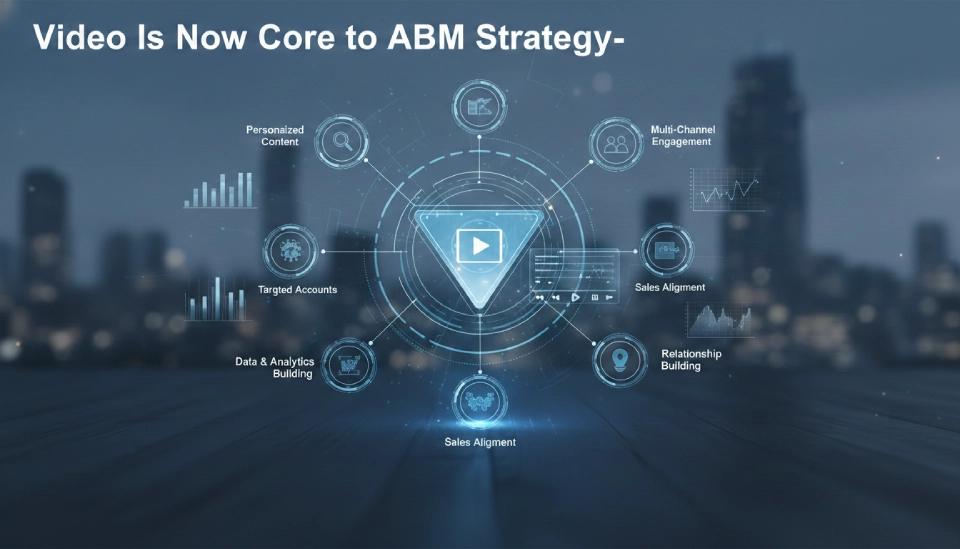
Video Is Now Core to ABM Strategy-
Account Based Marketing is no longer just email sequences and LinkedIn ads.
Video is integrated at key stages:
- Post-discovery call follow ups
- Stakeholder alignment summaries
- Executive level messaging
- Renewal reinforcement
When multiple decision makers are involved, video becomes a scalable alignment tool.
And alignment speeds decisions.
What’s Not Working in 2026?
Let’s be honest about what’s declining:
- Long webinars with no repurposing strategy
- Generic product demos without audience context
- Overproduced brand films without a measurable CTA
- Measuring success by views instead of revenue influence
Volume without distribution intelligence is a wasted budget.
The 2026 B2B Video Formula-
The brands winning in B2B video marketing are combining:
- Personalization at scale
- AI enabled efficiency
- Short form distribution
- Customer led credibility
- ABM integration
- Revenue attribution tracking
Video is no longer just content.
It’s a system.
Final Takeaway
If there’s one truth about B2B video marketing in 2026, it’s this:
Video works when it’s intentional.
Not louder.
Not longer.
Not flashier.
Smarter.
The teams treating video as a strategic growth lever not just a creative output are the ones seeing measurable impact.