
5 Things Every Founder Should Know About Explainer Video Costs
Explainer video costs are one of the first questions that come up when founders begin exploring video as a tool for business growth. Whether you’re launching a SaaS platform or building a fintech product, explainer videos help simplify your message, build trust, and convert interest into action.
But here’s the challenge:
- Costs can range anywhere from a few hundred to several thousand dollars
- Most of that variation depends on factors many founders are not aware of
- Budgeting without understanding what drives the price can lead to poor results
This blog will walk you through what truly affects explainer video costs, so you can make smart, confident choices. From style and scripting to strategy and team involvement, each point is written for decision-makers who want value, not guesswork.
Explainer videos are an investment. This guide will help you make sure it’s the right one.
1. Explainer video pricing depends on purpose, not just duration
Many founders assume that pricing for explainer videos is based only on how long the video is. But the reality is more nuanced. A 60-second product overview, a 60-second social ad, and a 60-second investor pitch may be the same length, but they serve completely different goals. That difference changes the production approach and cost.
Here’s what actually influences pricing beyond runtime:
- Target audience (B2B clients, investors, customers)
- Channel (website, LinkedIn, YouTube ads, presentations)
- Messaging complexity (Are you explaining a platform, an abstract idea, or a result?)
- Versioning needs (Do you need different versions for different platforms?)
For example:
- A simple product explainer video for a SaaS homepage might cost less than a versioned video meant for LinkedIn Ads, website, and email outreach.
- A fundraising pitch video will require tighter scripting, storytelling, and polish.
Founders looking for an all-in-one solution should explore our explainer video package, which includes strategy, scripting, multiple versions, and more so your video works harder across channels.
Pricing should match your purpose, not just the clock.
Strategic Purpose Drives Production Depth
When founders ask about video costs, they’re often thinking about the deliverable, a single file. But strategic video production considers the entire customer journey and how video assets integrate across touchpoints.
Homepage explainer videos require messaging that converts cold traffic into interested prospects. They need clear value propositions, minimal jargon, and compelling CTAs. This strategic depth increases production effort beyond simple animation.
Sales enablement videos must anticipate objections, demonstrate specific features, and provide reps with consistent messaging tools. This requires close collaboration with your sales team and iterative refinement.
Investor pitch videos demand emotional storytelling alongside metrics and traction. They need premium production quality that reflects your company’s professionalism and potential.
Each purpose requires different strategic input, messaging frameworks, and production polish. Understanding how much does an explainer video cost across these different use cases helps founders budget appropriately for their specific needs.
2. How animation style affects explainer video costs
Explainer video costs can shift significantly depending on the animation style you choose. It’s not just about visual appeal. Different styles require different levels of time, detail, and creative resources.
Here’s a quick breakdown of how style impacts pricing:
- Whiteboard animation – Simple and affordable, with limited visual creativity
- Motion graphics – Clean and modern, suitable for tech and SaaS brands
- 2D character animation – Great for storytelling and emotion, involves more custom work
- 3D animation – High-end visuals that take more time and cost the most
Custom illustrations, transitions, and branded visuals all add to the workload. That increase reflects directly in the budget. If your video needs to match a unique brand style or explain abstract processes clearly, more design effort will be required.
Tips for choosing a style:
- Match the visuals to what your audience expects
- Focus on clarity if you’re working with a tight budget
- Stay flexible if you need different versions or formats
Explore our animated explainer video services to see which style works best for your message and goals.
Choosing the right animation approach helps balance cost and communication.
Style Selection Impact on Brand Perception
The animation style you choose doesn’t just affect cost, it directly influences how prospects perceive your brand and offering.
Whiteboard animation positions your company as educational and approachable. This works well for complex B2B services where the focus is explaining methodology rather than showcasing brand personality. The limitation is that whiteboard lacks emotional resonance and can feel generic if not executed thoughtfully.
Motion graphics communicate professionalism and modernity. SaaS companies and fintech startups often choose this style because it aligns with their tech-forward positioning. The clean aesthetic scales well across platforms and maintains brand consistency.
2D character animation builds emotional connection through personified storytelling. If your value proposition centers on solving human problems or improving customer experiences, character-driven narratives help prospects visualize themselves using your solution.
3D animation signals premium positioning and technical sophistication. Medical device companies, manufacturing firms, and enterprise software with complex technical implementations use 3D to demonstrate capabilities that can’t be filmed or illustrated simply.
The style choice impacts not just immediate production costs but long-term brand perception and competitive positioning. Founders should consider both when making this decision.
3. Why scriptwriting, revisions, and storytelling aren’t “extras”
When you’re calculating explainer video costs, it’s easy to focus on animation and visuals. But the real foundation of a high-performing video is the script. That’s where the story, structure, and clarity come from.
Here’s why the script and strategy matter:
- A strong script keeps the viewer engaged and reduces drop-off
- The right structure helps deliver your message clearly and confidently
- Strategic input ensures the video supports your marketing and sales goals
Low-cost services often skip the discovery phase, rush the script, or deliver a generic voiceover. That may save money upfront but often results in a video that doesn’t perform.
At Motionvillee, scripting isn’t a side task. We build each video with a full video storytelling strategy, starting with briefing and idea development, followed by collaborative copywriting and structured feedback rounds. This gives you a video that feels tailored to your audience and aligned with your business.
A well-written script is not an add-on. It is a core investment in your explainer video’s success.
The Script Development Process That Drives Results
Professional script development follows a structured methodology that transforms raw product information into compelling narrative.
Discovery phase: Understanding your product, audience, pain points, and differentiation requires 2-3 hours of interviews and research. Budget providers skip this entirely, working only from a brief or website copy.
Messaging framework: Establishing the core message architecture, hook, problem, solution, how it works, benefits, CTA, creates the foundation. This framework ensures every sentence serves a strategic purpose.
Draft iterations: First drafts focus on getting the core message right. Second drafts refine pacing and eliminate jargon. Third drafts optimize for voiceover delivery and timing. Each iteration improves conversion potential.
Stakeholder alignment: Founders often discover through script reviews that internal teams have different understandings of the value proposition. Script development forces alignment on messaging that then improves all marketing materials.
Testing concepts: Strategic partners test messaging assumptions before locking the script. Does your target audience actually care about the benefits you’re emphasizing? Script testing prevents expensive production of ineffective messaging.
The script development investment typically represents 15-20% of total project costs but determines 70-80% of the video’s effectiveness. Cutting this corner to save money almost always backfires.

4. What’s included in explainer video production (and what’s not)
When breaking down explainer video costs, it’s important to understand what you’re actually paying for. Many companies overlook elements like voiceover, background music, or subtitles until they realize it was not included in the quote.
Here are the add-ons that can affect both pricing and impact:
- Professional voiceovers in US, UK, or regional accents
- Licensed music that adds emotional tone and polish
- Localization with subtitles or multi-language versions
- Adapted versions for different platforms such as social media, landing pages, and email
Founders should always clarify what’s included in the scope. Ask questions like:
- Is the voiceover cost built into the quote?
- Will I get subtitles for international viewers?
- Are social-friendly versions part of the delivery?
These elements may seem small, but they directly affect how well your video performs across different markets and platforms. The more your content is adapted for its audience, the more value it delivers.
Understanding what’s included helps you avoid last-minute surprises and ensures your explainer video is ready to work everywhere.
Hidden Costs That Surface After Production
Founders often discover additional expenses after initial production that weren’t discussed during the quoting process.
File format variations: Different platforms require different formats and specifications. YouTube prefers MP4. LinkedIn has different compression requirements. Email marketing tools need smaller file sizes. Some vendors charge extra for format conversions.
Source files and ownership: Many budget providers retain ownership of source files, meaning you can’t make simple edits later without paying additional fees. Always clarify who owns the assets and whether you’ll receive editable project files.
Usage rights and licensing: Is the music licensed for broadcast? Can you use it in paid advertising? Do usage rights expire after one year? These licensing questions affect long-term costs.
Update cycles: Products evolve. Features change. Pricing updates. How much will minor updates cost? Some vendors charge 30-40% of original production for small changes because they need to rebuild entire scenes.
Platform optimization: A 90-second video perfect for your website may perform poorly on Instagram where 30 seconds is optimal. Creating variations for each platform adds costs but dramatically improves performance.
Comprehensive quotes should outline these considerations upfront. If they don’t, ask specifically about each element to avoid budget surprises later.
5. Low-cost explainer videos often miss strategy, quality, or results
When reviewing explainer video costs, it’s tempting to go for the cheapest option. But lower price often means lower value.
Here’s what typically happens:
- A $500 freelancer video may look okay, but usually comes with template visuals, no strategy, and no long-term impact
- A $3,000+ studio video includes planning, storytelling, revisions, and assets built around your business
The result?
- Cheap videos often fail to drive engagement or conversions
- Well-made videos increase clarity, build trust, and support multiple goals across marketing and sales
What truly matters is what’s included:
- Script and concept development
- Multiple rounds of feedback
- Custom visuals, voiceover, and platform-specific versions
- Long-term usability across your website, ads, and outreach
Instead of just asking, “How much does it cost?”, ask “What will this video help my business achieve?”
Ready to get pricing that fits your exact goals? Get a tailored quote and we’ll walk you through the options.
The Real Cost Comparison: $1K vs $5K Investment
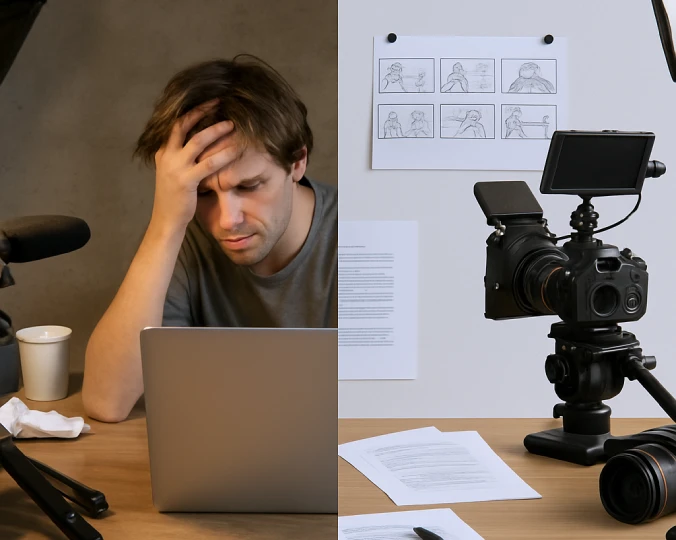
Understanding the quality and strategic depth differences at different price points helps founders make informed decisions. The gap between budget and strategic video production isn’t just about polish, it’s about business impact.
$1K vs $5K explainer video options reveal dramatically different production approaches, team involvement, and ultimate effectiveness. Budget videos use templates, stock assets, and minimal strategy. Strategic videos include custom creative, messaging development, and performance optimization.
The practical difference shows in results:
Budget videos typically achieve 0.5-1.5% conversion rates when used on landing pages. They look professional enough to avoid embarrassment but lack the strategic messaging and visual engagement to drive action.
Strategic videos consistently deliver 3-5% conversion rates because every element, hook, pacing, visuals, voiceover, CTA, is optimized based on proven frameworks and industry benchmarks.
If your landing page receives 10,000 monthly visitors, the conversion difference means 150 demo requests with budget video versus 400 with strategic video. At a 20% close rate and $15,000 ACV, that’s $750,000 in additional annual pipeline from the same traffic.
The $4,000 investment difference becomes negligible when measured against business impact.
The Opportunity Cost of Inadequate Video
Beyond the direct production cost comparison, founders must consider what happens when video isn’t good enough to drive results.
Launching a product without an explainer video creates measurable costs across conversion, sales efficiency, and competitive positioning. But launching with an inadequate video creates similar problems, confused prospects still bounce, sales reps still spend time on basic education, and competitors with clearer messaging still win deals.
The question isn’t just “Should we invest in video?” It’s “Should we invest enough to make video actually work?”
A $1,500 video that doesn’t convert costs $1,500 plus all the opportunity costs of poor performance. A $5,000 video that drives pipeline costs only $5,000 because it’s preventing much larger losses.
Founder-specific considerations:
Runway constraints: Early-stage founders with limited cash often gravitate toward budget video. But if that video doesn’t convert, you’ve burned precious runway on an asset that doesn’t help you grow. Better to wait and do it right than to do it poorly now.
First impressions matter: Your explainer video is often the first substantial brand experience prospects have. A mediocre video signals mediocre product, regardless of actual quality. Premium brands need premium communication.
Rework costs add up: Many founders who start with budget video return 6-12 months later for a complete remake. The total cost (budget video + strategic video) exceeds starting with strategic video, plus you’ve lost 6-12 months of better conversion rates.
Stakeholder confidence: Videos used in investor pitches or board presentations need to reflect well on the company. Budget video can undermine confidence in leadership judgment and attention to quality.
Know What You’re Paying For and Why
When it comes to explainer video costs, the price tag should never be the only factor guiding your decision. Founders and decision-makers need to consider:
- What’s included in the cost
- Whether the video supports your brand and business goals
- How clearly it explains your product or service
- The value it brings over time
A low-cost video might save money upfront, but it can limit results or require rework later. On the other hand, a well-planned video gives you long-term ROI through better clarity, conversions, and confidence in your messaging.
Making the Investment Decision
Smart founders approach explainer video costs as a business investment requiring ROI analysis, not a creative expense driven by aesthetic preferences.
Calculate your specific break-even: How many additional conversions does your video need to drive to pay for itself? If you invest $5,000 in video and your average customer value is $10,000 with a 20% close rate, you need just 3 additional demo requests from improved homepage conversion. That’s the break-even point.
Most homepage explainers drive dozens to hundreds of additional conversions over their useful life (18-24 months), making ROI calculations strongly positive when execution is solid.
Consider the full timeline: Production takes 4-6 weeks. The video then works for you 24/7 for 18-24 months before messaging becomes stale enough to require updates. Amortized over this timeline, even $6,000 production costs just $250-350 monthly for an asset generating hundreds of conversions.
Factor in opportunity cost: Every month without effective video communication represents lost conversions, extended sales cycles, and competitive disadvantages. Waiting for the perfect moment or trying to squeeze costs lower extends the period where you’re losing money to these inefficiencies.
At Motionvillee, we help you choose the right path based on your priorities, not pressure. From creative scripting to tailored styles and smart delivery, every detail is designed to work hard for your brand.
Ready to understand exactly what explainer video investment makes sense for your specific situation? Get in touch with Motionvillee’s explainer video production services for transparent pricing, strategic consultation, and production that delivers measurable results aligned with your business goals.