
An explainer video is a great way to push your brand and content to the targeted audience. It helps to break down complex products, services, or concepts into easily digestible content. Meanwhile, they are inherently more engaging than texts or static images.
Videos are also highly shareable with a high conversion rate. Meanwhile including it in email campaigns can increase click-through rates. It can also boost open rates and decrease unsubscribe rates for your newsletter.
Explainer videos of products or services can also be personalized for different segments of the audience. This type of content can also significantly increase viewer retention and conversion rates.
Brand explainer videos often get caught up on what and how and forget to focus on the why. Often they are good at explaining a product or service but fail at communicating the company’s underlying purpose. It can lead to a disconnect with the audience, who may not truly resonate with the value proposition of the product.
These videos need to go beyond mere explanations and tap into the emotional and philosophical reasons behind the brand’s existence. Along with the emotional connection, a good distribution strategy is also needed.
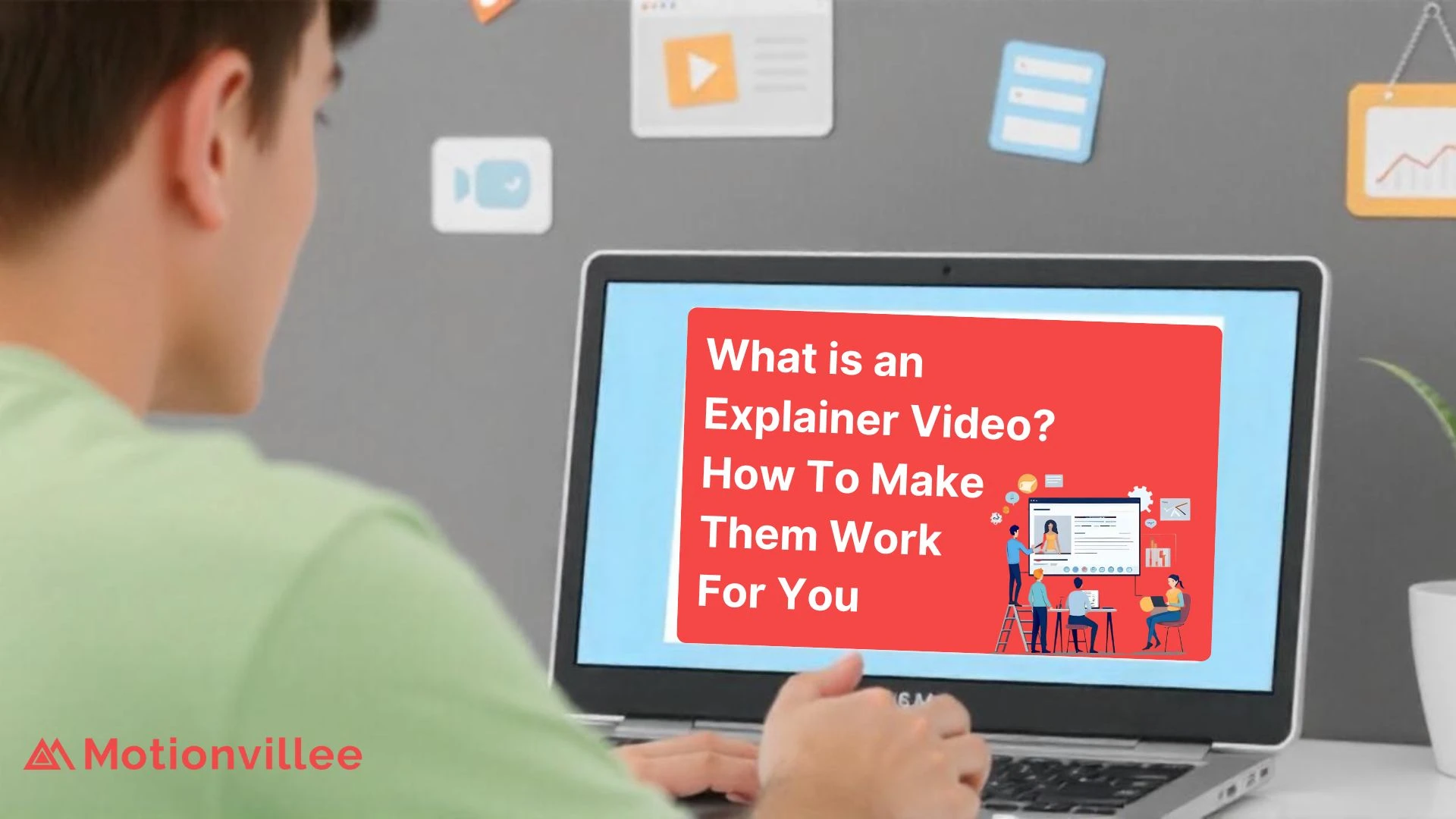
Let’s delve into what Explainer videos are and how can these videos help to increase brand awareness.
What Is An Explainer Video?
Explainer videos are a type of short-form video content that typically is between 30 seconds to 3 minutes. It helps to explain the product or any other concept in a fun and colorful way. These videos are typically used as a marketing tool to demonstrate the benefits of a product and to boost sales or signups.
Explainer videos are majorly focused on a specific problem and answering why they are the solution. They also have a strong CTA and a high quality of production. These type of videos typically uses a combination of visuals, voiceover, animation, and many more.
These videos are typically of two types: animated explainer videos and the other is live-action explainer videos. Live-action explainer videos are a traditional method that uses real people for the shoot. Meanwhile, Animated explainer videos are one of the most affordable options for any type of organization. Understanding 6 explainer video styles and when to use each one helps you choose the right format that aligns with your brand message and budget. A variety of tools and techniques are majorly used for the production of animated explainer videos.
Let’s have a look at why animated explainer videos are the best option for any type of organization.
What Makes Animated Explainer Videos A Great Bet For Organizations?
Animated explainer videos are typically used for their visuals and the relative ease of creating them. Due to the educational nature of these videos animated explainer videos tend to be more appealing than someone standing and explaining.
They are typically of three types 2d vector,3d animation, and motion graphics. 2d vectors are mostly flat cartoon-style videos while 3d animations use 3d models to create videos.
These videos can range in style and function. Some of the most popular styles include infographics, chalkboards, product simulation, and character-driven. These styles are all different and are used as per their targeted audience.
Animated videos also provide flexibility in illustrating abstract concepts that might be difficult to capture with live-action footage. The use of motion graphics and dynamic transitions keeps viewers engaged, while visual consistency and branding elements reinforce the brand’s identity. Additionally, these animation also allows for easy updates and customization, making it cost-effective for any organization. The versatility of animated explainer videos makes them a powerful tool for delivering a clear message to the audience.
How To Make Explainer Videos In Your Budget?
To create a video you first need to decide what type of audience are you targeting and what type of video you need to create. Before starting production, it’s essential to understand how much does an explainer video cost so you can plan your budget accordingly. To create a high-quality explainer video for a product, you need every element to align from story, and editing to design and music.
A video follows the same three-step production process that the live-action video takes. The first step in creating a storyboard is the production stage. This step involves coming up with the concept, writing the script, and gathering the crew for the editing and shooting.
The process of creating animated explainer video is systematic and requires careful planning at each stage. The second step in making an explainer is the production stage. It is the step where you start animating or start shooting your explainer. This step also involves doing a voiceover with high-quality sound and adding CTA at the end of your video. The third and final step of the process is post-production. It involves editing the video and laying music over the video or any sound effects.
While it’s possible to create an explainer with your resources the success of it depends on your goal and capabilities. One can make a quick product demo and can likely get away with the charm of simplicity. Meanwhile one can also consider a video agency with experience and resources to execute the same. If you’re evaluating options, this advanced guide on how to choose the best explainer video production company can help you make an informed decision.
Does Explainer Video Work In Brand Recognition?
Videos have always been a compelling format of advertising, but brand explainer videos are a more effective way to engage with the audience. One of the research by Opensignal also showed that more than 60% of the audience is likely to watch short videos on mobile devices. Explainer videos in this format help the brand to position itself in a better way with great engagement with the audience from the get-go.
These videos also help to save resources and free up manpower and resources. For example, your customer service representative and salespeople have to make the same pitch and demonstration over and over. An explainer video frees up manpower and energy for which your team will surely thank you and your messaging across all the brand touch points will be consistent.
Explainer videos especially Animated explainer videos are becoming the new trend in the industry. Various multinational companies are using it to keep their brand messaging consistent across all platforms. So, the explainer video works in brand recognition.
Crafting the Perfect Explainer Video Script
The foundation of any successful explainer video lies in its script. A well-written script ensures your message is clear, engaging, and conversion-focused. The 4 building blocks of an explainer video script that converts include a compelling hook, clear problem identification, solution presentation, and a strong call to action.
Your script should speak directly to your audience’s pain points while keeping the language simple and conversational. Avoid jargon and technical terms that might confuse viewers. Instead, focus on benefits rather than features, helping your audience understand how your product or service solves their specific problems.
The structure of your script also determines how effectively you communicate your message. Each sentence should move the story forward, building momentum toward your desired outcome, whether that’s a sign-up, purchase, or demo request.
Choosing the Right Length for Your Explainer Video
Video length plays a crucial role in maintaining viewer attention and delivering your message effectively. The question of short or long videos which is the best explainer video length depends on your specific goals, platform, and audience preferences.
Generally, explainer videos work best when kept between 60 to 90 seconds. This duration is long enough to explain your value proposition clearly while short enough to maintain viewer engagement throughout. However, complex products or B2B solutions might require slightly longer videos to adequately address the audience’s concerns.
Platform also matters when determining video length. Social media explainers might perform better at 30 seconds, while website homepage videos can extend to 2 minutes if the content remains engaging. The key is to respect your audience’s time while delivering complete information.
Distribution Strategy: Getting Your Explainer Video Seen
Creating a high-quality explainer video is only half the battle. The real challenge lies in ensuring your target audience actually sees it. Understanding how to effectively promote and distribute explainer videos is critical for maximizing your return on investment.
Your distribution strategy should be multi-channel, placing your video where your audience spends their time. This typically includes your website homepage, landing pages, email campaigns, social media platforms, and paid advertising channels.
Each platform requires a slightly different approach. LinkedIn might favor longer, more detailed explainers for B2B audiences, while Instagram and TikTok demand shorter, punchier versions. Your YouTube strategy should focus on SEO optimization, while email campaigns benefit from thumbnail optimization to increase click-through rates.
Testing different placements and versions of your explainer video helps identify what resonates best with your audience, allowing you to refine your distribution strategy over time.
Common Pitfalls to Avoid
Even well-intentioned explainer videos can fall flat if they make common mistakes. Learning about explainer video mistakes 8 common errors and how to avoid them can save you time, money, and frustration during production.
One of the most frequent mistakes is making the video too long or too complex. Remember, the goal is to simplify, not to showcase every feature of your product. Another common error is neglecting the audio quality. Poor voiceover or background music can undermine even the most beautifully designed animation.
Many brands also fail to include a clear call to action, leaving viewers engaged but unsure of what to do next. Your CTA should be prominent, specific, and easy to follow. Additionally, not optimizing for mobile viewing is a critical oversight, given that most video consumption now happens on mobile devices.
Testing your video with a small audience before full launch can help identify issues you might have overlooked during production.
Learning from the Best: Explainer Video Examples
Studying successful examples helps you understand what works in practice. Looking at 12 explainer video examples that prove storytelling still wins reveals common patterns among high-performing videos.
The best explainer videos share several characteristics: they start with a relatable problem, present the solution clearly, use engaging visuals, and end with a compelling call to action. They also tend to evoke emotion, whether through humor, empathy, or inspiration.
Analyzing top-performing explainers in your industry can provide valuable insights into audience preferences, effective storytelling techniques, and production quality benchmarks. Pay attention to how these videos structure their narratives, use color and design, and incorporate brand elements.
Industry-Specific Considerations for B2B Brands
B2B explainer videos face unique challenges compared to B2C content. The 12 must have elements in a high converting B2B explainer video differ from consumer-focused videos because you’re often addressing multiple decision-makers with varying concerns.
B2B explainers need to balance technical accuracy with accessibility. Your audience is typically more knowledgeable but also more skeptical, requiring evidence-based claims and clear ROI justification. These videos often need to address concerns around implementation, integration, and ongoing support.
The tone for B2B explainers should be professional yet conversational, avoiding overly casual language while still remaining engaging. Case studies, data points, and testimonials carry more weight in B2B contexts, helping build credibility with enterprise buyers.
Developing a Winning Video Strategy
A single explainer video is valuable, but a comprehensive video strategy delivers exponential results. Implementing 5 winning explainer video strategies that guarantee success ensures your video content works cohesively across your entire marketing funnel.
Your strategy should map different video types to different funnel stages. Awareness-stage videos might be shorter and more conceptual, while consideration-stage explainers can dive deeper into features and benefits. Decision-stage videos might include detailed demos or customer testimonials.
Creating a content calendar for video production helps maintain consistency and ensures you’re always producing fresh content. This approach also allows you to test different messages, formats, and styles, continuously optimizing based on performance data.
Integration with other marketing channels amplifies your video’s impact. Repurpose your explainer content for blog posts, social media snippets, email campaigns, and sales presentations to maximize your production investment.
Staying Ahead: Current and Future Trends
The explainer video landscape constantly evolves with new technologies and audience preferences. Keeping up with top animated explainer video trends to expect in 2026 helps ensure your content remains relevant and engaging. (Note: Content should be updated with 2025 trends)
Current trends include increased personalization, interactive elements, and shorter formats optimized for social media. The rise of AI tools is also democratizing video production, though human creativity remains irreplaceable for truly compelling storytelling.
Vertical video formats have gained prominence with the popularity of TikTok, Instagram Reels, and YouTube Shorts. Brands that adapt their explainer content to these formats often see higher engagement rates, particularly with younger audiences.
Sustainability and social responsibility messaging are also becoming more prominent in explainer videos, as audiences increasingly care about brands’ values beyond their products or services.
Partner with Professional Explainer Video Production Services
Ready to create marketing videos that convert your audience into your customers? Partner with Motionvillee’s explainer video production services to make your brand stand out in the crowded landscape. Whether you are looking to launch your initial video campaign or increase your brand visibility, we’re here for you. Contact us today to start making videos that drive engagement and bring verifiable leads to your sales funnel.
Ready to create marketing videos that convert your audience into your customers? Partner with Motionvillee to make your brand stand out in the crowded landscape. Whether you are looking to launch your initial video campaign or increase your brand visibility, we’re here for you. Contact us today to start making videos that drive engagement and bring verifiable leads to your sales funnel.