

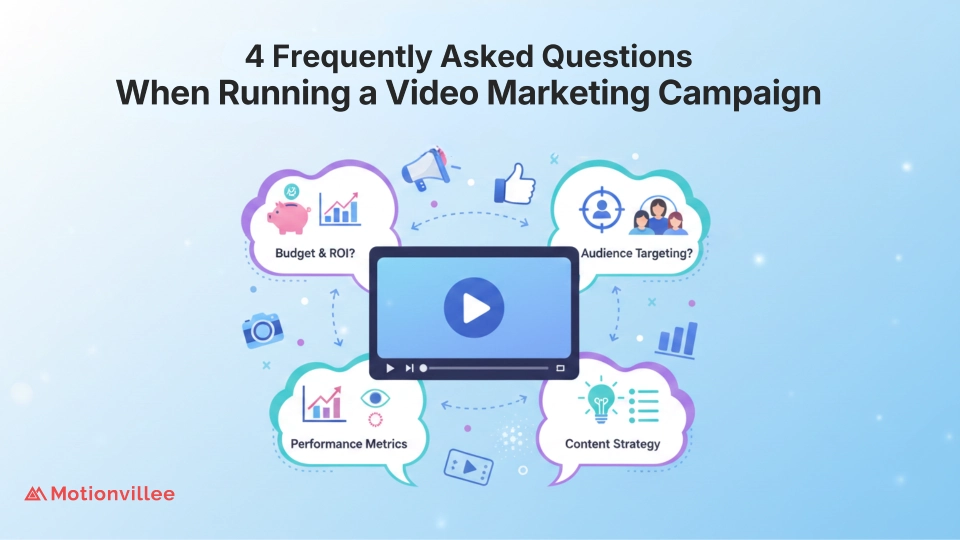
4 Frequently Asked Questions When Running a Marketing Campaign
Running a marketing campaign isn’t just about execution, it’s about making the right decisions at the right time.
Most campaigns don’t fail because of lack of effort. They fail because the strategy behind them isn’t clear enough.
Whether you’re launching a product, scaling a service, or testing a new idea, these are the four questions that matter the most.
Are we clear about who this campaign is actually for?
The biggest mistake in marketing campaigns is trying to target everyone.
If your audience isn’t clearly defined, your messaging becomes generic and generic messaging rarely converts. You need to know exactly who you’re speaking to, what they care about, and what problem you’re solving for them.
This clarity directly impacts everything from ad creatives to content strategy. Many brands improve campaign performance simply by refining their audience and aligning communication with intent.

Is our message simple enough to understand instantly?
Even a strong campaign can fail if the message is too complex.
Your audience should be able to understand what you offer within seconds. If they have to think too much, they move on.
This is where formats like video become powerful. Brands often use clear, structured video content to simplify communication (Why explainer videos are essential for startups), making it easier for users to grasp value quickly.
Clarity isn’t just helpful, it’s critical.
Are we using the right channels to reach our audience?
Being present everywhere doesn’t guarantee results. Being present in the right places does.
Your campaign should align with where your audience already spends time whether that’s social media, search, email, or video platforms.
Brands that adapt their content to platform behavior instead of posting the same thing everywhere 18tend to perform better. This is why many teams focus on platform-specific video strategies to improve reach and engagement (Video marketing strategies for social media growth).
Are we measuring what actually matters?
Not all metrics are useful.
Likes and views may look good, but they don’t always translate into results. The real focus should be on metrics like conversions, engagement quality, and customer acquisition.
Campaigns improve when decisions are based on performance data not assumptions. Testing, learning, and optimizing continuously is what separates average campaigns from high-performing ones.
Final Thoughts
Every successful marketing campaign comes down to clarity:
- Clear audience
- Clear message
- Clear distribution
- Clear measurement
When these four areas are aligned, campaigns become more predictable, scalable, and effective.