
Which 10 AI Avatar Tools We Tested and Why
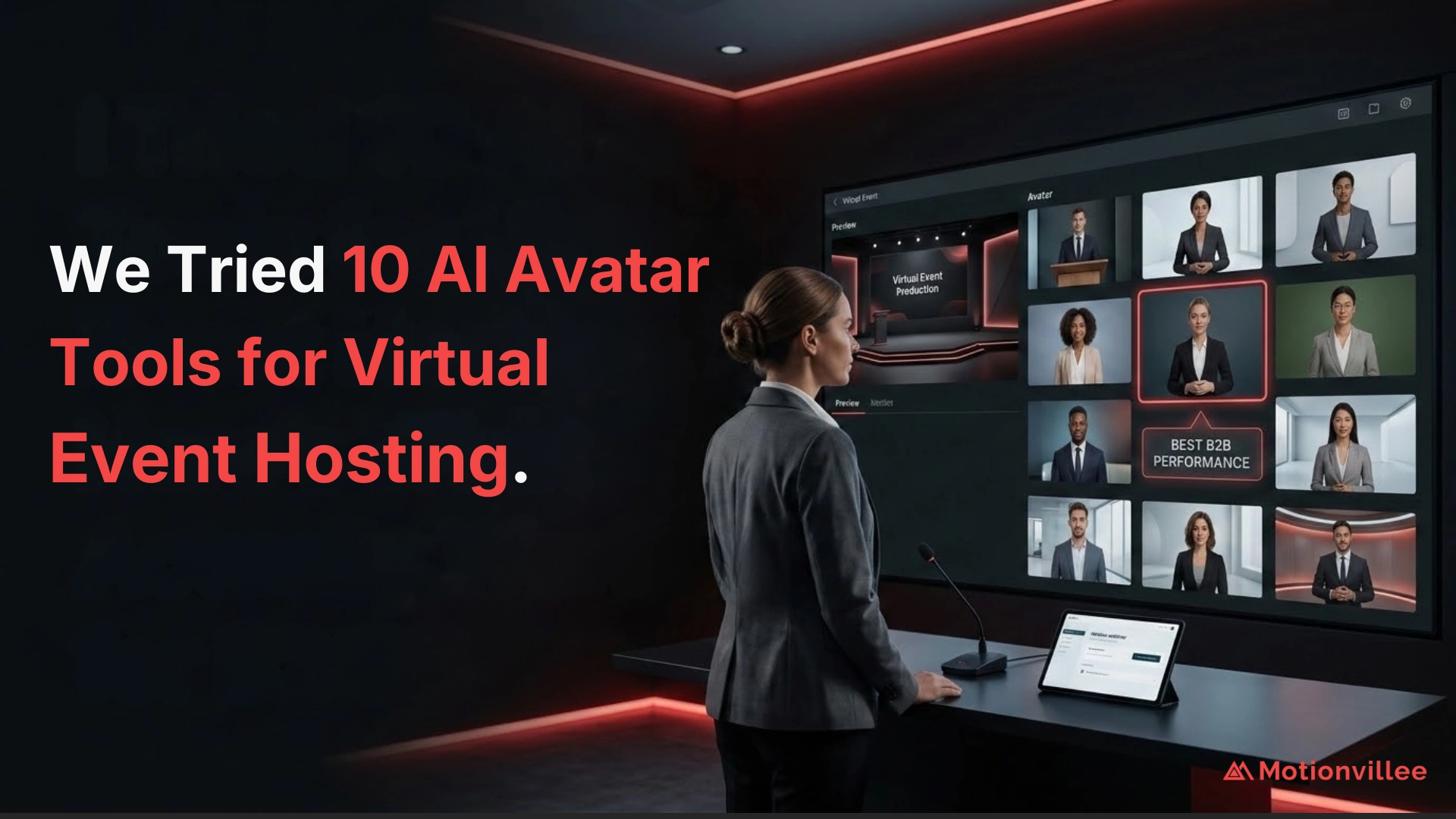
We tested 10 AI avatar tools to understand whether they could support a virtual event, not just create polished talking head videos.
That difference matters.
A normal AI avatar video only needs to deliver a script. A virtual event needs structure, pacing, trust, transitions, clear calls to action, and content that can be reused after the live session.
The 10 tools we tested were:
1. Hour One
2. Elai.io
3. Yepic AI
4. AKOOL
5. Vidnoz AI
6. Tavus
7. Gan.ai
8. Soul Machines
9. UneeQ
10. Pitch Avatar.
We chose these tools because they covered different event use cases: webinar intros, product launch narration, speaker transitions, multilingual content, personalized follow up, event recaps, interactive digital human experiences, and presentation based video creation.
For a wider tool comparison, see best AI avatar tools for video marketing in 2026 .
The goal was not to find one universal winner.
The goal was to see which AI avatar tools worked for specific B2B event moments.
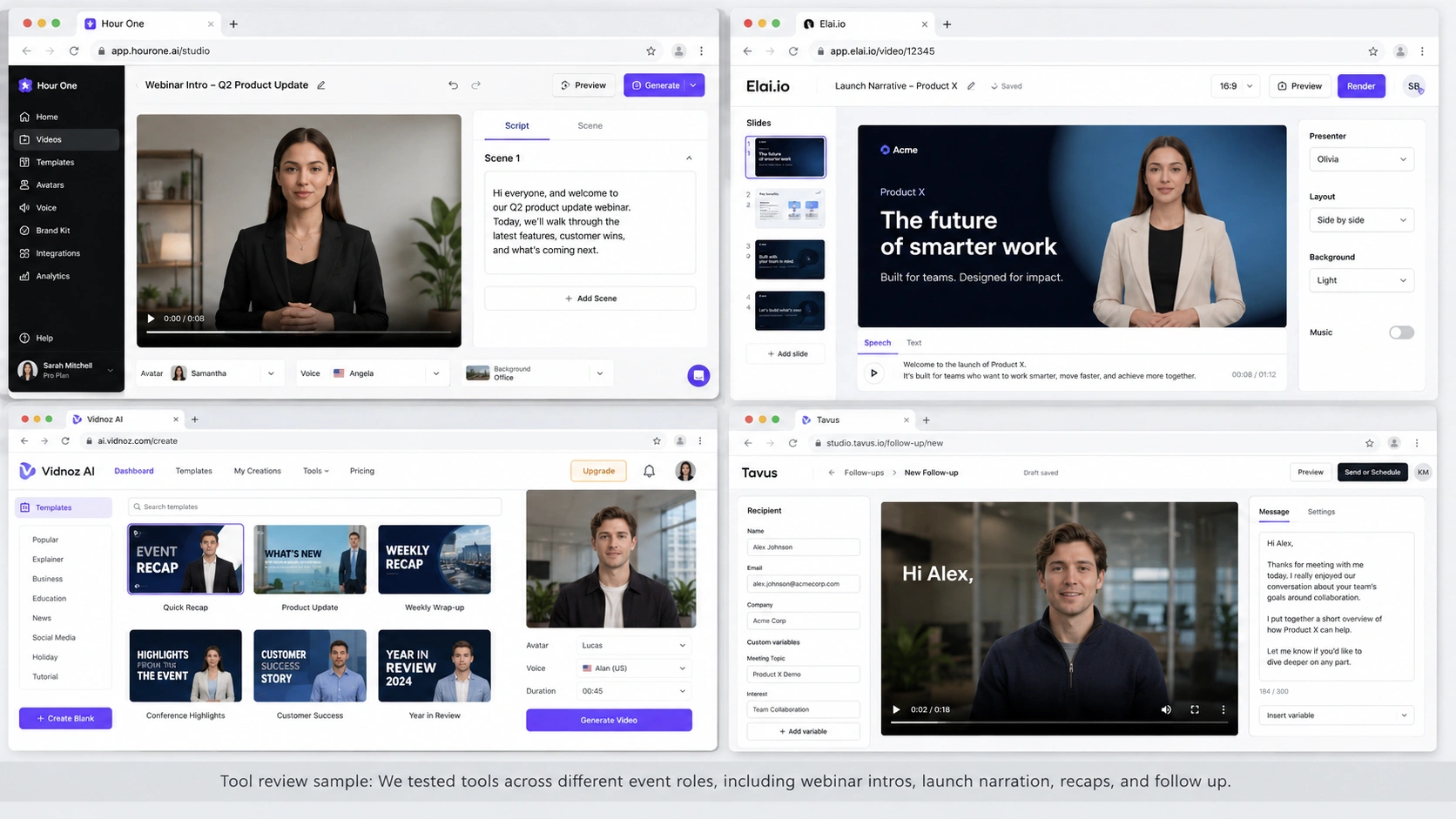
Why We Tested AI Avatar Tools for Virtual Event Hosting
We tested AI avatar tools because virtual events are becoming harder to produce at scale.
B2B teams now need event invitations, webinar intros, agenda videos, speaker introductions, replay pages, follow up videos, recap clips, and social cutdowns. That creates a content workload before and after the event.
Wyzowl reports that 63% of video marketers have used AI video tools to help create or edit marketing videos [Wyzowl, 2026]. That shows adoption is rising, but adoption does not prove business fit.
The real question is whether an AI avatar can support a professional event without making the brand feel less credible.
For broader context on AI avatar and video adoption, What B2B Video Marketing Trends Should You Prepare For in 2026? fits naturally here.
What We Looked for During the Test
We reviewed each tool based on event usefulness, not general video quality.
We looked at presenter realism, voice quality, script delivery, slide support, webinar intro quality, agenda transition quality, multilingual support, brand control, CTA delivery, replay value, ease of use, and fit for business events.
The main question was simple:
Can this tool support a real event moment without feeling distracting, robotic, or off brand?
That question changed the test. A tool could look realistic and still feel weak if it could not support event flow. Another tool could look simpler and still work well for structured moments like introductions, recaps, or multilingual replay content.
What Worked Better Than Expected
The biggest surprise was that realism was not the deciding factor.
Before testing, we expected the most human looking avatars to perform best. That was only partly true.
Realism helped, but event fit mattered more. Some tools looked polished but struggled with pacing, transitions, or CTA delivery. Other tools worked better because they handled a specific job clearly.
For webinar intros, Hour One worked well for a polished corporate style. Elai.io worked better when slides and structured content mattered. Yepic AI and Elai.io felt useful for multilingual openings.
For lightweight product launch narration, AKOOL, Vidnoz AI, and Elai.io performed well. Hour One felt stronger when the event needed a more formal presenter.
For personalized follow up, Tavus stood out because the use case was less about hosting and more about relevance after the event.
The practical finding was clear:
AI avatars work better as event guides than event personalities.
What Actually Worked for B2B Events
AI avatars worked best in structured, repeatable event moments.
They were useful for welcoming attendees, introducing the agenda, presenting sponsor messages, moving between speakers, summarizing key points, localizing replay content, and creating post event follow up.
Goldcast’s 2026 webinar benchmark report analyzed 26,190 webinars across 522 B2B organizations and reported that 97.8% of video clips created by Goldcast customers were AI generated [Goldcast, 2026]. This does not prove AI avatars are ideal hosts, but it does show that AI assisted video repurposing is becoming a major part of the B2B event content system.
That is the best way to think about AI video avatars for business events. They should not replace every human moment. They should help the event produce more useful content before, during, and after the live session.
For SaaS teams, virtual event video tools should also connect with the wider video system. A webinar intro or recap is only one asset inside a broader content engine. What 9 Video Assets Does Every SaaS Company Need in 2026? explains how event content can fit alongside demos, explainers, testimonials, and sales videos.
Which Tools Worked Best for Each Event Use Case
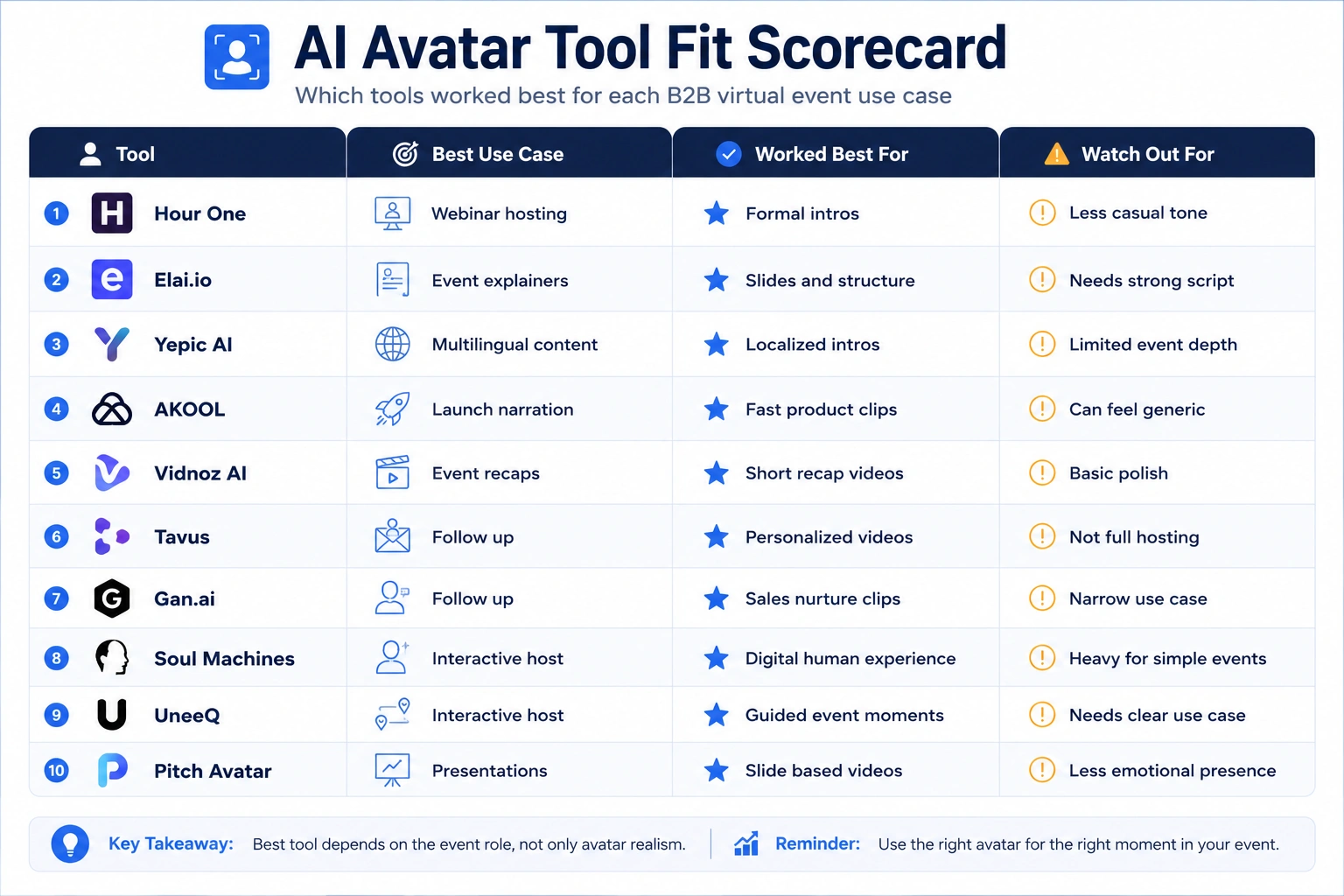
The best tools depended on the event role.
This was not a universal ranking. It was a fit based view.
| Event Use Case | Strong Fit |
| Webinar style hosting | Hour One |
| Simple event explainers | Elai.io |
| Multilingual event content | Yepic AI, Elai.io |
| Personalized follow up | Tavus |
| Interactive digital humans | Soul Machines, UneeQ |
| Event recaps and short clips | Vidnoz AI, AKOOL |
| Presentation based content | Pitch Avatar |
| Lightweight launch narration | AKOOL, Vidnoz AI, Elai.io |
The strongest use cases were clear: welcome, transition, recap, localize, and follow up.
That is where the best AI avatar tools for B2B created value.
Where AI Avatar Tools Started to Fail
AI avatar tools started to fail when the event needed human judgment, emotional nuance, or senior credibility.
The common issues were robotic pacing, weak emotional range, awkward CTA delivery, poor connection with slides, limited live interaction, and low trust in executive moments.
This does not mean AI avatar videos are bad for business.
It means role fit matters.
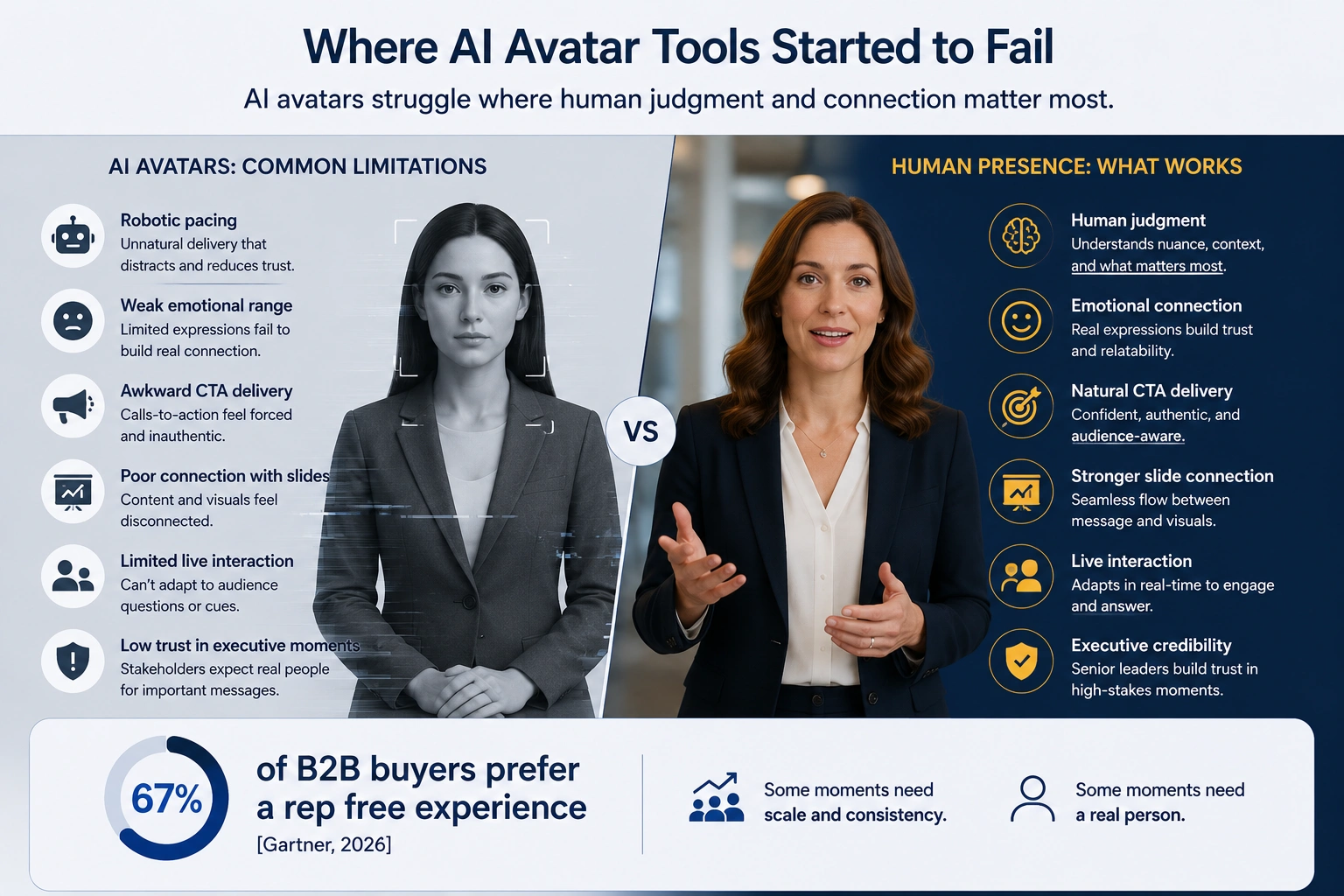
Gartner reports that 67% of B2B buyers prefer a rep free experience [Gartner, 2026]. That supports the need for stronger self directed content. But it does not mean every brand interaction should feel automated.
Some moments need scale and consistency.
Some moments need a real person.
What Is the Difference Between an AI Avatar Video and AI Event Hosting?
An AI avatar video and AI event hosting are not the same thing.
An AI avatar video delivers content.
AI event hosting supports an experience.
| Factor | AI Avatar Video | AI Event Hosting |
| Main purpose | Deliver a script | Guide an event experience |
| Best use | Short updates, explainers | Webinars, launches, transitions |
| Main requirement | Realistic presenter | Flow, pacing, trust, structure |
| CTA role | End screen or spoken CTA | Registration, demo, replay, follow up |
| Success metric | Completion and quality | Attendance, engagement, leads, replay value |
| Main risk | Looks generic | Breaks trust if poorly used |
This was one of the most important findings from the test.
A tool can create a good avatar video and still be weak for event hosting.
When a Human Host Still Works Better
A human host still works better when the event needs trust, judgment, authority, or emotional presence.
Use a human host for executive events, investor sessions, customer advisory boards, high value webinars, live Q and A, sensitive topics, security discussions, finance discussions, or moments where audience energy matters.
Use an AI avatar for structured and repeatable moments.
That is also the practical answer to whether AI avatars can host B2B events?
yes, but they should usually host parts of the event, not the whole experience.
How to Use AI Avatars for Webinars and Events
AI avatars work best when they support the event system instead of replacing every human moment.
A practical structure could look like this:
- AI avatar for welcome and agenda
- Human speaker for main insight
- AI avatar for session transitions
- Product demo for proof
- AI avatar for recap and CTA
- Short clips for post event nurture
- Personalized follow up after the event
- Replay intro for on demand viewers
This is how to use AI avatars for webinars without weakening trust. Let the avatar handle repeatable structure. Let humans handle judgment, authority, and live energy.
What Businesses Should Check Before Choosing a Tool
Before choosing an AI avatar for event hosting, define the event job first.
Ask:
- Is this for a live event or recorded event?
- Does the avatar need to host, introduce, recap, or follow up?
- Does the audience expect human authority?
- Do we need multilingual versions?
- Will this content be reused after the event?
- Does the CTA need to drive registration, replay views, or demos?
- Can the tool support our brand tone?
- Will the avatar improve the experience or distract from it?
The right tool depends on the role, not only the avatar quality.
What We Found After Testing 10 AI Avatar Tools
After testing 10 AI avatar tools, one thing became clear:
AI avatars can support virtual events, but they work best when the role is specific.
They are useful for intros, transitions, multilingual versions, event recaps, replay pages, and follow up content.
They are weaker when the moment needs live judgment, emotional nuance, or senior trust.
So the starting point should not be:
“Which AI avatar looks most realistic?”
It should be:
“What part of the event are we trying to improve?”
Once that is clear, AI avatars become much more useful.
For teams that need a strategic partner before production starts, explore this Explainer Video Company .