
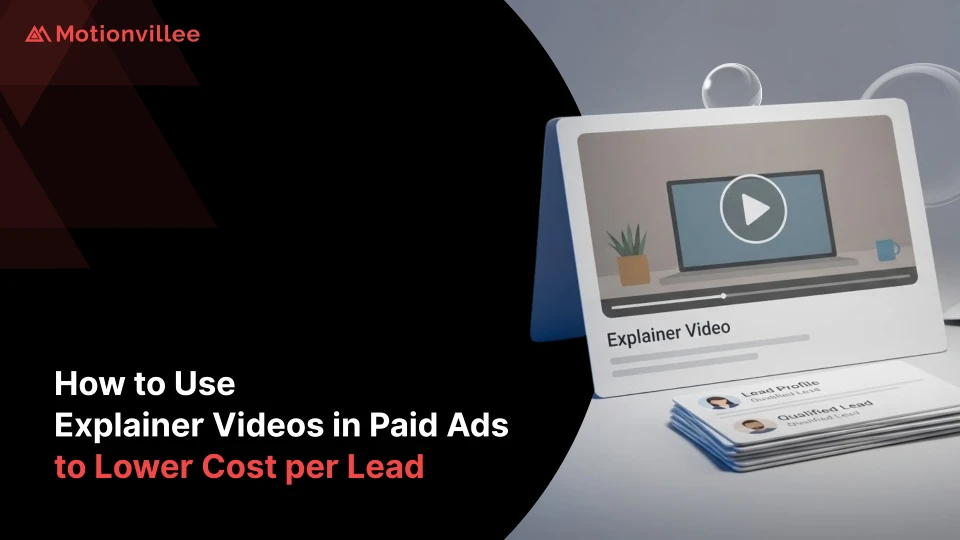
How to Use Explainer Videos in Paid Ads to Lower Cost per Lead
Learning how to use explainer videos in paid ads reduces cost per lead by 40-60% compared to static creative through superior engagement signals, platform algorithm favorability, audience targeting precision, and conversion-optimized creative elements that transform cold traffic into qualified prospects efficiently.
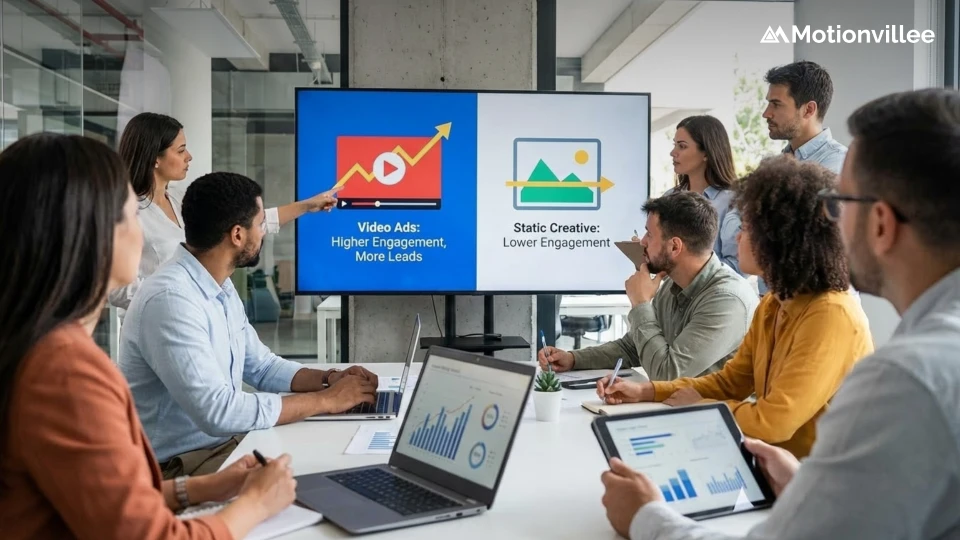
Why Video Ads Outperform Static Creative in Lead Generation
Video ads generate 27% higher click-through rates and 34% lower cost per lead than static image ads across major platforms because engagement signals trigger algorithm favorability while dynamic storytelling overcomes attention barriers that static creative cannot penetrate.
Video advertising advantages compound across the conversion funnel:
- Superior attention capture in crowded social feeds
- Complex value proposition communication in seconds
- Emotional connection building through storytelling
- Platform algorithm preference improving organic reach
- Retargeting precision based on video viewing behavior
Measurable video ad performance improvements:
- 27-35% higher CTR than static image ads
- 34-52% lower cost per lead in B2B campaigns
- 2-3x longer average engagement time per impression
- 40-60% higher conversion rates on landing pages
- 23-41% lower cost per acquisition at full funnel
Understanding what explainer videos are and how they work helps teams recognize paid advertising as strategic distribution channel requiring creative optimization beyond organic video performance standards.
The Cost per Lead Problem With Traditional Paid Advertising
Traditional paid advertising faces escalating costs through audience saturation, creative fatigue, and declining platform performance, with static image campaigns experiencing 15-25% CPL increases year-over-year as competition intensifies and attention spans shrink.
Static Image Ad Fatigue and Declining Performance
A Static image ads suffer rapid performance degradation as frequency increases, with audience fatigue setting in after 3-5 impressions causing CTR to drop 40-60% and CPL to increase proportionally within 2-3 weeks of campaign launch.
Static ad fatigue timeline:
- Week 1-2: Strong performance as fresh creative reaches new audiences
- Week 3-4: Declining CTR as audience saturation begins
- Week 5-6: Significant performance drops requiring creative refresh
- Week 7+: Continued degradation making campaigns unsustainable
Video ads resist fatigue longer because varied content within single asset maintains interest across multiple viewings, with viewers extracting different information from repeated exposures rather than mentally dismissing familiar static images.
How Video Engagement Signals Lower CPL Through Platform Algorithms
Social platform algorithms reward video ads generating engagement through views, completion rates, and interactions by reducing delivery costs and improving placement quality, creating virtuous cycles where engaging video lowers CPL while poor video increases costs.
Engagement signals reducing ad costs:
- 3-second video views indicating attention capture
- Video completion rates showing content relevance
- Likes, comments, and shares signaling quality
- Click-through to landing pages demonstrating intent
- Watch time percentage revealing engagement depth
Platforms charge less for ads audiences engage with because engagement signals predict positive user experience, aligning platform business model with advertiser objectives and creating opportunity for optimization-driven CPL reduction.
Platform-Specific Video Ad Strategies That Reduce Lead Costs
Each advertising platform requires tailored video strategies optimizing for unique audience behaviors, content formats, and algorithm priorities, with platform-specific optimization reducing CPL by 30-50% compared to generic cross-platform approaches.
LinkedIn Video Ads for B2B: Targeting and Cost Efficiency
The LinkedIn video ads deliver lowest B2B cost per lead when targeting job title, company size, and industry combinations with 15-30 second professional videos emphasizing business outcomes over entertainment value.
| LinkedIn Ad Format | Optimal Video Length | Average CPL | Best Use Case |
|---|---|---|---|
| Sponsored content video | 15-30 seconds | $45-$85 | Cold audience awareness |
| Message ads with video | 30-45 seconds | $35-$65 | Direct engagement campaigns |
| Document ads with video | 60-90 seconds | $50-$90 | Gated content promotion |
LinkedIn video optimization tactics:
- Professional tone matching platform business context
- Captions mandatory for feed browsing without sound
- Clear business value proposition within first 3 seconds
- Industry-specific messaging increasing relevance
Understanding how to promote explainer videos through LinkedIn helps teams optimize both organic and paid LinkedIn video strategies for maximum B2B lead generation efficiency.
Facebook and Instagram Video Creative That Converts Cold Audiences
The Facebook and Instagram video ads require stopping power in entertainment-focused feeds through pattern interrupts, emotional hooks, and mobile-first vertical formats, with 6-15 second videos performing best for cold audience acquisition.
Facebook/Instagram video best practices:
- Square (1:1) or vertical (4:5, 9:16) formats for feed optimization
- Bold visual movement in first 1-2 seconds capturing attention
- Captions essential as 85% view without sound
- Clear visual branding throughout video maintaining recognition
- Strong CTA overlays directing next steps
YouTube Pre-Roll and Discovery Ads for High-Intent Prospects
The YouTube TrueView ads deliver exceptionally low CPL for high-intent prospects actively searching solutions, with skippable pre-roll and discovery ads targeting search queries and competitor video viewers generating qualified leads at $15-$35 CPL.
YouTube ad targeting advantages:
- Search query targeting reaching active solution researchers
- Competitor video placement capturing consideration-stage buyers
- Related video targeting educating interested prospects
- Remarketing to website visitors warming cold traffic
Understanding YouTube distribution strategy for explainer videos helps teams leverage both organic and paid YouTube opportunities synergistically for maximum lead generation impact.
TikTok and Short-Form Video Platforms for Emerging Opportunities
The TikTok and emerging short-form platforms offer temporarily suppressed CPL during early adoption phases, with authentic, native-style creative outperforming polished production in feeds prioritizing entertainment over overt advertising.
TikTok ad creative requirements:
- Native, unpolished aesthetic matching organic content
- 9:16 vertical format optimized for mobile viewing
- Hook within first 2 seconds preventing immediate scroll
- Trending audio or visual styles leveraging platform culture
- Soft-sell approach avoiding obvious advertising tone
Optimizing Video Length for Paid Ad Performance
Video length dramatically impacts both cost per impression and conversion rate, with optimal duration varying by platform, audience temperature, and offer complexity, requiring strategic length decisions balancing message completeness against attention span realities.
The 6-Second Rule for Attention Capture
First 6 seconds determine whether viewers continue watching or scroll past, requiring immediate value delivery, visual interest, and relevance signaling that justifies attention investment for remaining video duration.
6-second hook elements:
- Problem statement viewers immediately recognize
- Surprising statistic or claim creating curiosity
- Visual pattern interrupt standing out in feed
- Direct benefit promise addressing viewer need
- Question engaging viewer’s self-interest
Test video performance by comparing 3-second view rate to impression count. Rates below 15-20% indicate hook failure requiring creative revision before additional budget investment.
15-Second vs 30-Second vs 60-Second Performance Data
Video length sweet spots vary by platform and objective, with 15-second videos typically delivering lowest CPL for awareness campaigns while 30-60 second videos convert better for complex products requiring explanation.
| Video Length | Best Platform | Optimal Use | Average CPL Impact |
|---|---|---|---|
| 6-15 seconds | Instagram, Facebook | Brand awareness, retargeting | Baseline (lowest) |
| 15-30 seconds | LinkedIn, Twitter | Value prop communication | +15-25% vs 6-15 sec |
| 30-60 seconds | YouTube, Facebook | Product explanation | +30-45% but higher quality |
| 60+ seconds | YouTube only | Complex solutions, demos | +50-70% but best MQL rate |
When Longer Videos Actually Lower Your Cost per Lead
Longer videos reduce CPL for complex products requiring explanation by pre-qualifying prospects, filtering uninterested viewers early while thoroughly educating engaged prospects who convert at significantly higher rates justifying increased cost per click.
Situations favoring longer video ads:
- High-ticket products ($10,000+ ACV) justifying higher CPC
- Complex solutions requiring education before conversion
- Retargeting campaigns to warmed audiences
- YouTube campaigns capturing high-intent searchers
- Lead quality prioritization over volume
Creative Elements That Drive Lower CPL in Video Ads
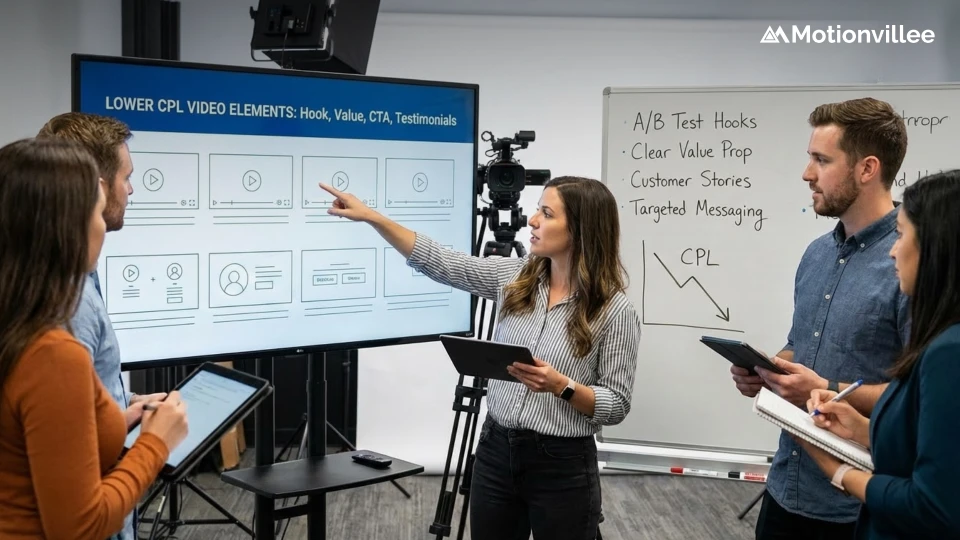
Specific creative elements including hook formulas, caption implementation, pacing optimization, and CTA timing directly impact engagement metrics determining platform costs, with systematic optimization reducing CPL by 30-60% through iterative refinement.
Hook Formulas That Stop the Scroll in Paid Feeds
Proven hook formulas combining curiosity, relevance, and benefit promises in first 3 seconds achieve 25-40% higher view-through rates than generic openings, directly reducing CPL through improved engagement signals.
High-performing hook formulas:
- Problem agitation: “Struggling with [problem]? Here’s why…”
- Surprising stat: “[X%] of [audience] don’t know [insight]”
- Benefit promise: “How to [achieve outcome] without [obstacle]”
- Question hook: “What if you could [desire] in just [timeframe]?”
- Pattern interrupt: Unexpected visual or statement
Captions and Text Overlay for Sound-Off Viewing
Captions increase video completion rates by 40-80% and lower CPL proportionally by enabling comprehension for 85% of social video viewed without sound, making captions essential rather than optional for paid video performance.
Caption best practices:
- Large, high-contrast text readable on mobile screens
- Strategic keyword emphasis through color or size
- Complete narration coverage maintaining comprehension
- Subtitle-style captions preferred over burned-in narration
- Platform-native caption tools improving delivery costs
Understanding how to effectively promote and distribute explainer videos helps teams recognize caption optimization as critical distribution component across all channels including paid advertising.
Visual Pacing That Maintains Engagement Through Conversion
Scene changes every 2-4 seconds maintain visual interest preventing viewer attention drift, with faster pacing in early seconds capturing attention and slower pacing in conversion segments allowing CTA processing.
Optimal video pacing structure:
- Seconds 0-6: Rapid cuts establishing hook (1-2 second scenes)
- Seconds 6-20: Medium pacing presenting value (2-3 second scenes)
- Seconds 20-end: Slower pace allowing CTA focus (3-5 second scenes)
CTA Placement Timing for Maximum Click-Through
The CTA placement affects both view-through rates and click-through conversion, with early CTAs (15-20 seconds) capturing highly motivated prospects while end CTAs (80-90% completion) converting thoroughly educated viewers at higher quality.
CTA timing strategy by objective:
- Volume focus: CTA at 50-60% video completion capturing most viewers
- Quality focus: CTA at 80-90% completion ensuring education
- Dual CTA: Mid-video for eager prospects, end CTA for cautious buyers
Audience Targeting Precision With Video Ad Capabilities
Video viewing behavior provides superior retargeting and lookalike audience signals compared to static ad engagement, enabling precision targeting that reduces wasted spend and lowers CPL through audience refinement impossible with image-only campaigns.
Behavioral Signals Video Viewing Provides for Retargeting
Video engagement creates granular retargeting audiences based on viewing percentage, enabling message sequencing from initial awareness through consideration stages with progressively detailed content matching prospect education level.
Video-based retargeting audiences:
- 3-second viewers: Minimal interest, broad retargeting
- 25% completion: Curious prospects, awareness-stage content
- 50% completion: Engaged prospects, consideration-stage offers
- 75% completion: High-intent prospects, demo/trial CTAs
- 95% completion: Very high-intent, aggressive conversion campaigns
Lookalike Audience Creation From Video Engagers
Lookalike audiences seeded from high-engagement video viewers outperform lookalikes based on website visitors or page engagement by 30-50% in CPL efficiency because video engagement indicates authentic interest rather than accidental page views.
High-performance lookalike seed audiences:
- 75%+ video completion viewers (highest quality)
- Video viewers who clicked to landing page
- Video viewers who submitted lead forms
- Customers who engaged with video before purchasing
Sequential Video Strategies That Warm Cold Traffic
Sequential video campaigns delivering progressively detailed content to audiences based on previous video engagement warm cold traffic efficiently, reducing final conversion CPL by 40-65% compared to single-video approaches demanding immediate conversion.
Three-video sequence example:
- Video 1: Problem awareness (15 seconds, reach objective)
- Video 2: Solution education (30 seconds, engagement objective, targets Video 1 viewers)
- Video 3: Product demo (60 seconds, conversion objective, targets Video 2 completers)
Landing Page Alignment That Converts Video Ad Traffic
Landing page messaging, design, and experience must align perfectly with video ad content creating seamless continuation, with message match and video integration on post-click pages improving conversion rates by 35-60% and lowering effective CPL proportionally.
Message Match Between Video Ad and Landing Page
The Message consistency between video ad promises and landing page headlines, copy, and offers prevents dissonance causing abandonment, with exact headline and benefit language repetition from video to page improving conversion by 25-45%.
Message match requirements:
- Landing page headline mirrors video hook or main benefit
- Visual branding consistent between ad and page
- Offer specifics match exactly (price, terms, deliverables)
- Tone and language style maintains consistency
- Supporting copy expands video claims without contradiction
Video Continuation Strategy on Post-Click Pages
Embedding video on landing pages extending or recapping ad content improves conversion rates by 30-50% by reinforcing messages while providing additional information justifying conversion decisions for viewers requiring more persuasion.
Landing page video strategies:
- Extended version of ad video with deeper detail
- Complementary video addressing different objections
- Customer testimonial reinforcing ad claims
- Product demo showing promised capabilities
Form Optimization for Video-Warmed Prospects
Video-warmed prospects convert at higher rates with shorter forms because video pre-qualifies interest, allowing 3-5 field forms generating comparable lead quality to 8-10 field forms for cold traffic while improving conversion rates significantly.
Form optimization for video traffic:
- Reduce form fields to essential information only
- Remove qualifying questions video already addressed
- Use progressive profiling for known visitors
- Test single-step vs multi-step forms systematically
Metrics Beyond Cost per Lead That Predict Long-Term Success
CPL optimization without quality consideration creates volume of unqualified leads undermining campaign ROI, requiring holistic measurement including lead quality, sales-qualified lead rates, and customer acquisition costs revealing true video ad effectiveness.
Lead Quality Indicators From Video Ad Sources
Lead quality from video ads typically exceeds static creative quality by 20-40% measured through sales-qualified lead conversion, demo show rates, and eventual customer conversion because video education pre-qualifies serious prospects effectively.
| Quality Metric | Static Ad Average | Video Ad Average | Improvement |
|---|---|---|---|
| SQL conversion rate | 15-25% | 25-40% | +40-60% |
| Demo show rate | 35-45% | 50-65% | +30-45% |
| Opportunity rate | 8-15% | 15-25% | +60-90% |
| Close rate | 18-25% | 25-35% | +30-40% |
View-Through Conversions and Attribution Windows
Video ads generate significant view-through conversions from prospects who watch without clicking immediately but convert later, requiring 7-28 day attribution windows capturing delayed conversion behavior that standard 1-day windows miss entirely.
Attribution window recommendations:
- 1-day click, 7-day view: Standard starting point
- 7-day click, 28-day view: B2B longer sales cycles
- Test different windows measuring impact on reported CPL
- Compare platform attribution to CRM multi-touch models
Customer Acquisition Cost and Lifetime Value Analysis
Video ad success requires CAC and LTV analysis revealing whether lower CPL delivers profitable customer acquisition, with video campaigns often generating higher LTV customers through better pre-qualification justifying slightly higher acceptable CAC targets.
Understanding how explainer videos boost email open rates and ways to repurpose explainer videos helps teams maximize video investment across multiple channels beyond paid advertising.
Common Video Ad Mistakes That Inflate Lead Costs
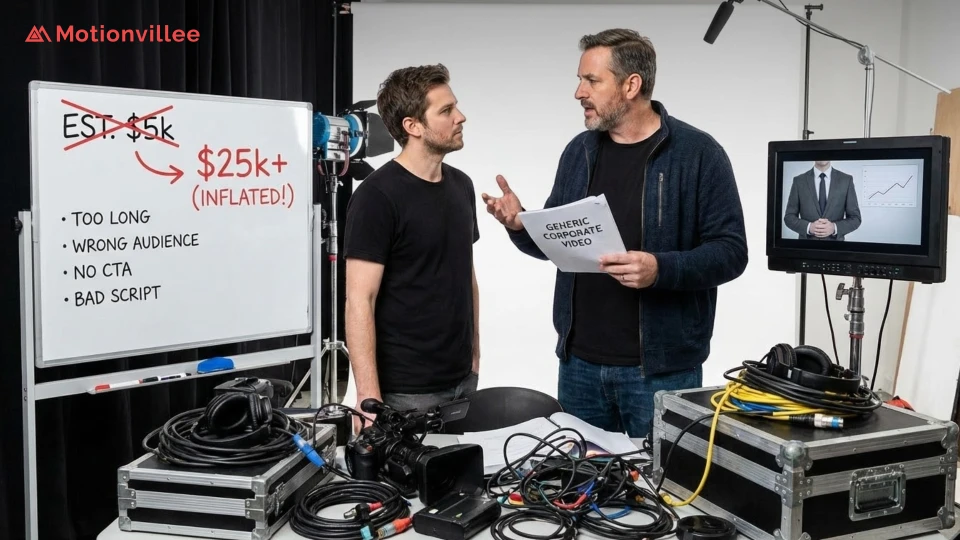
Predictable video ad mistakes including organic content repurposing, mobile optimization neglect, and premature budget scaling inflate CPL by 50-150% compared to campaigns avoiding these errors through systematic testing and platform-specific optimization.
Repurposing Organic Content Without Ad Optimization
Organic explainer videos optimized for website embedding or YouTube discovery fail in paid ads because different contexts demand different creative approaches, with paid placement requiring aggressive hooks and CTAs that organic content avoids.
Organic to paid adaptation requirements:
- Add aggressive 3-second hook capturing feed attention
- Insert clear, specific CTAs absent from organic versions
- Shorten length by 30-50% for paid attention spans
- Add captions essential for sound-off mobile viewing
- Adjust aspect ratio for platform-specific feeds
Ignoring Mobile-First Creative Requirements
Mobile devices generate 70-85% of social ad impressions, requiring vertical or square formats, large text, and simplified visuals, with horizontal videos and small text creating poor mobile experience inflating CPL through reduced engagement.
Mobile-first video requirements:
- Vertical (9:16) or square (1:1) aspect ratios
- Large, high-contrast text readable on small screens
- Simple compositions avoiding cluttered visuals
- Captions accommodating sound-off viewing
- Fast pacing maintaining attention on mobile
Budget Exhaustion Before Algorithm Learning Phases Complete
Platform algorithms require 15-50 conversions for optimization learning, with campaigns paused prematurely before learning completion missing performance improvements that occur after initial high-CPL learning phases finish.
Learning phase guidelines:
- Budget sufficient for 50+ conversions per week minimum
- Avoid pausing or editing during learning phases
- Wait 7-14 days before judging campaign performance
- Expect 20-40% higher CPL during learning period
- Scale gradually after learning completion
Building Sustainable Low-CPL Video Ad Systems
Learning how to use explainer videos in paid ads reduces cost per lead through platform-specific optimization, creative testing frameworks, audience targeting precision, and measurement systems connecting video engagement to business outcomes beyond vanity metrics.
Essential video ad optimization components:
- Platform-specific strategies recognizing unique audience behaviors and formats
- Length optimization balancing message completeness against attention spans
- Creative elements including hooks, captions, and CTAs driving engagement
- Audience targeting leveraging video viewing behavior for retargeting precision
- Landing page alignment creating seamless ad-to-conversion experiences
Video ads outperform static creative through superior engagement signals triggering algorithm favorability, with platforms rewarding engaging content through reduced delivery costs creating compounding advantages for optimized video campaigns.
Sequential video strategies warming cold traffic through progressive education reduce final conversion CPL by 40-65% compared to immediate conversion demands, with audience segmentation based on viewing behavior enabling precise message matching to prospect readiness.
Quality measurement beyond raw CPL including SQL rates, demo shows, and customer acquisition costs reveals video ads typically generate 20-40% higher lead quality despite potentially higher nominal CPL, justifying video investment through superior ROI metrics.
Understanding how to promote animated explainer videos and tips for distributing explainer videos for maximum reach helps teams integrate paid advertising within comprehensive distribution strategies.
Working with experienced explainer video production services and video production services in the USA ensures videos meet both creative quality standards and technical paid advertising requirements across multiple platforms.
Schedule a strategy call with Motionvillee to develop video advertising campaigns optimizing creative elements, audience targeting, and budget allocation for sustainable low-CPL lead generation supporting predictable pipeline growth and customer acquisition efficiency.