
Why Most Explainer Videos Fail to Generate ROI — and What the Top 1% Do Differently
Explainer videos are everywhere in B2B marketing.
Every SaaS homepage has one. Every pitch deck references one. Every marketing team talks about needing one.
And yet, most of them quietly fail.
They get views. Sometimes even decent engagement. But they don’t convert, don’t influence the pipeline, and definitely don’t justify the investment.
That gap between “looks good” and “drives ROI” is where most teams get stuck.
Let’s break down why that happens and what the top 1% are doing differently.
The Core Problem: Most Explainer Videos Are Built Backwards
Here’s the uncomfortable truth.
Most explainer videos are created to explain the product, not the problem.
They start with:
- Features
- Interfaces
- Capabilities
But buyers don’t start there.
They start with confusion, frustration, or inefficiency.
If your video doesn’t reflect that reality immediately, it feels irrelevant.
This is why even visually strong videos underperform.
Mistake 1: Leading With Features Instead of Problems
Most explainer videos rush into showcasing the product.
Dashboards. Tools. Technical explanations.
But if the viewer hasn’t recognized their own problem yet, none of that lands.
The top 1% flips this completely.
They start with a situation the viewer relates to. Something that feels familiar. Something that makes them think, “this is exactly my issue.”
This shift is also reinforced in How to boost conversions with animated explainer videos, where the connection between problem clarity and conversion is direct.
No clarity, no action.
Mistake 2: Trying to Say Too Much
This is probably the most common issue.
Teams try to pack everything into one video:
- All features
- All benefits
- All use cases
The result is not more clarity. It’s confusion.
Explainer videos are not meant to educate completely. They are meant to guide the viewer into the next step.
Top-performing videos simplify aggressively.
Mistake 3: Ignoring the Viewer’s Journey
Most explainer videos assume the viewer already understands the context.
They skip the buildup and jump straight to the solution.
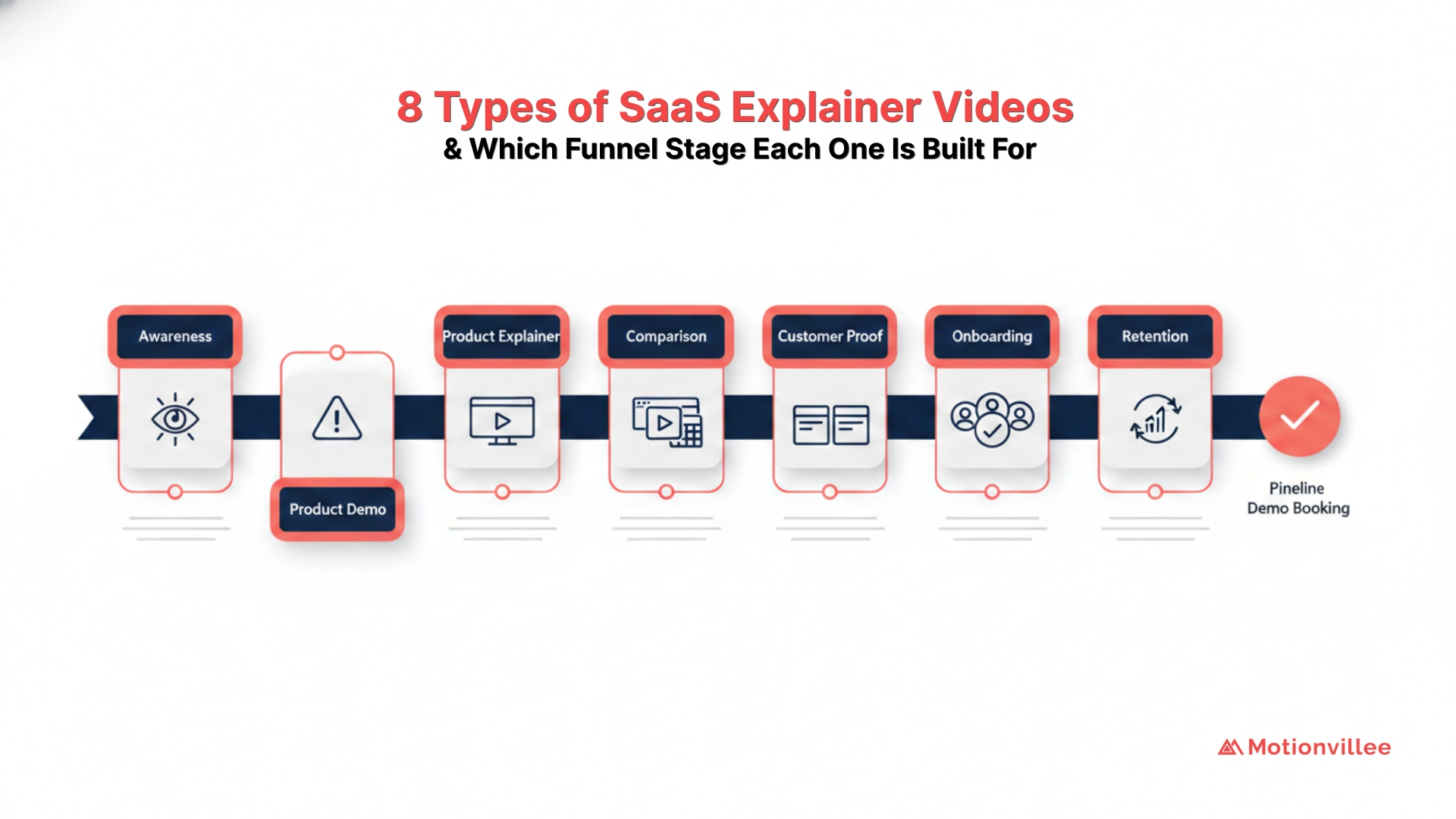
But in reality, buyers move through stages:
- Awareness
- Consideration
- Decision
If your video doesn’t match the viewer’s stage, it creates friction.
This is why many teams revisit frameworks like Process of creating animated explainer video to align structure with user journey instead of internal thinking.
Mistake #4: Weak Emotional Connection
A lot of explainer videos are technically correct but emotionally flat.
They explain what the product does, but they don’t make the viewer feel anything.
And in B2B, even though decisions are logical, they are still driven by emotional triggers like:
- Relief
- Confidence
- Trust
The top 1% builds subtle emotional connections into their scripts.
This aligns with ideas from Myths about explainer videos, especially the misconception that B2B content has to be purely functional. It doesn’t.
Mistake 5: No Real Distribution Strategy
Here’s something most teams underestimate.
A great video with poor distribution performs worse than an average video with strong distribution.
Many teams:
- Upload once
- Share once
- Move on
That’s not a strategy.
Explainer videos need to be repurposed, distributed, and reinforced across channels.
Insights from How to promote your animated explainer video? highlight how distribution directly impacts performance.
Without it, ROI never materializes.
What the Top 1% Do Differently
The difference is not budget. It’s approach.
1. They Build Around the Buyer’s Reality
Instead of starting with the product, they start with the user’s situation.
The video feels relatable before it feels informative.
2. They Focus on One Clear Message
No clutter. No overload.
One problem. One solution. One takeaway.
That clarity increases retention and improves conversion.
3. They Optimize for the First Few Seconds
The opening is everything.
Top videos establish relevance immediately.
No long intros. No slow buildup.
Just direct connection.
4. They Treat Video as Part of a Larger System
Explainer videos are not standalone assets.
They are connected to:
- Landing pages
- Sales conversations
- Email flows
- Social content
Each touchpoint reinforces the same message.
5. They Test, Learn, and Iterate
The top 1% doesn’t treat videos as final outputs.
They treat them as experiments.
They test:
- Hooks
- Messaging angles
- Formats
Then refine based on performance.
The Role of Tools vs Strategy
It’s easy to assume better tools will fix performance.
They won’t.
Tools improve execution. Strategy drives results.
Even the best production setup cannot compensate for weak positioning or unclear messaging.
That’s why content frameworks and structured thinking matter more than the tools themselves.
A Simple Way to Check Your Explainer Video
Before you finalize your video, ask:
- Does it clearly show the problem in the first few seconds?
- Is the message focused or overloaded?
- Is it aligned with a specific stage of the funnel?
- Do you have a clear distribution plan?
If any of these are missing, ROI will suffer.
Final Thought
Most explainer videos fail not because they are poorly made, but because they are poorly aligned.
They try to say too much, to too many people, without a clear starting point.
The top 1% does the opposite.
They simplify. They focus. They build from the buyer’s perspective.
And that’s what turns an explainer video from a passive asset into a revenue-driving tool.
Because in B2B marketing, attention is just the beginning.
What matters is what happens next.