
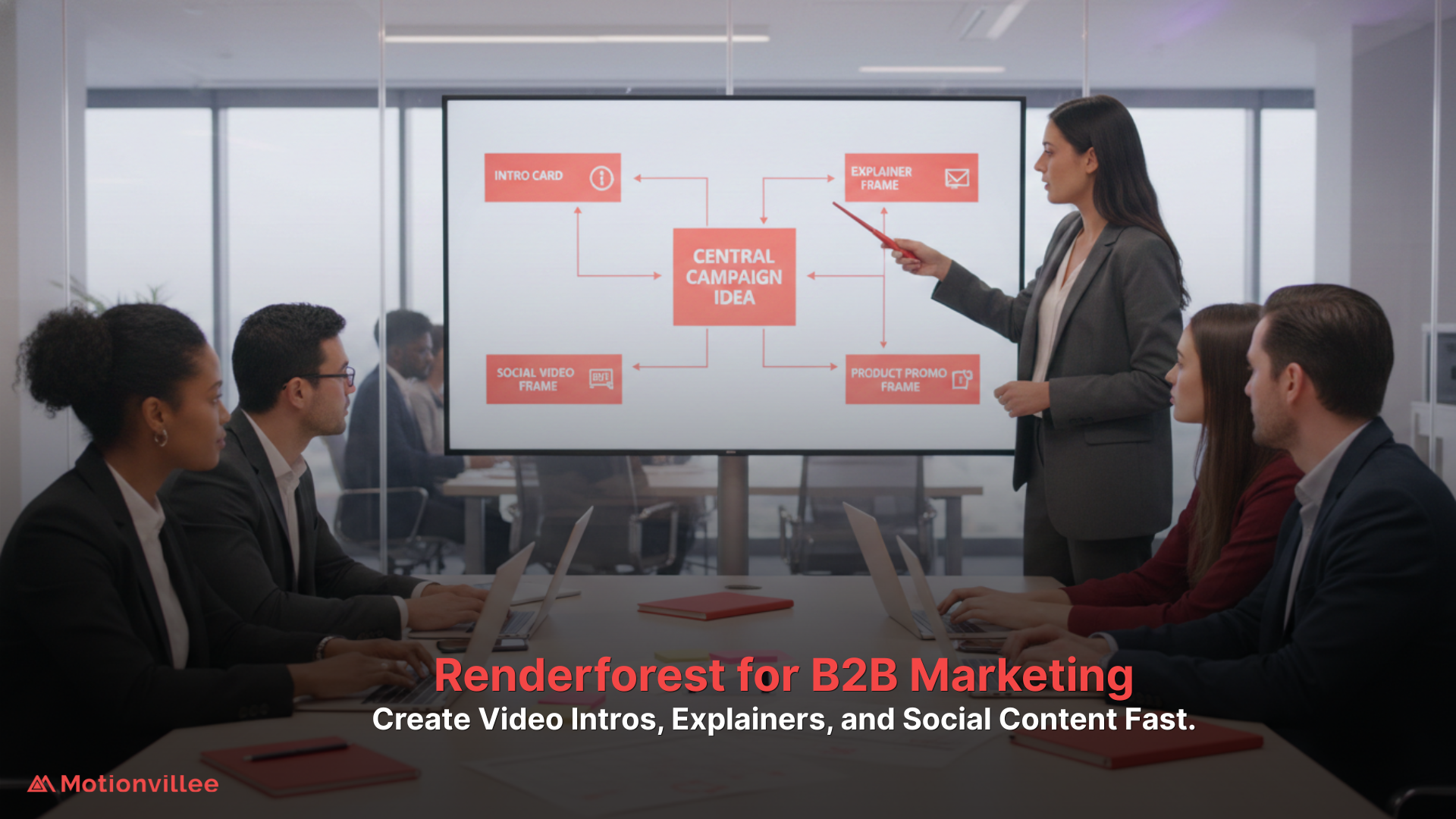
Renderforest for B2B Marketing: Create Video Intros, Explainers, and Social Content Fast
B2B marketing today runs on one simple truth. If you can’t explain value quickly, you lose attention. And once attention is gone, nothing else really matters.
That’s why video has moved from “nice to have” to “default format” across SaaS, services, and enterprise marketing.
But there’s still a gap most teams struggle with. They know video works. They don’t always have the production bandwidth to keep up with demand.
This is where tools like Renderforest sit comfortably. Not as a replacement for creative strategy, but as a way to produce faster without restarting every time.
Let’s break down where it actually fits inside a real B2B content system.
Why Video Has Become the Core of B2B Communication
B2B buyers don’t make decisions quickly. They research, compare, loop in stakeholders, and revisit information multiple times before committing.
So your content needs to do more than inform. It needs to be simplified.
Video works because it compresses complexity. Instead of reading long pages or decks, viewers get context visually, which speeds up understanding.
This is also why formats like explainers dominate modern funnels. As explored in How an Animated Explainer Video Can Boost Your Business, clarity directly impacts decision-making speed.
And once clarity improves, everything else in the funnel becomes easier.
Where Renderforest Actually Fits in B2B Marketing
Here’s the thing. Most teams don’t fail because they lack ideas. They fail because execution takes too long.
Renderforest solves a very specific problem: reducing the time between idea and usable video.
It doesn’t replace storytelling. It removes production friction.
Let’s look at how teams actually use it.
1. Video Intros That Improve First Impressions
First impressions in B2B are subtle but powerful. Whether it’s a sales deck, a webinar, or a product walkthrough, the opening seconds decide engagement.
With Renderforest, teams can quickly build:
- Logo animations
- Intro sequences
- Branded openers
This becomes especially useful when you’re building structured communication assets like explained in Process of Creating Animated Explainer Video, where consistency across stages matters as much as the final output.
A strong intro doesn’t explain everything. It just sets the tone right.
2. Explainer Videos That Actually Scale
Explainer videos are still one of the most effective B2B assets because they answer one question clearly: “What does this do and why should I care?”
The problem is production time.
Renderforest helps shorten that cycle by turning scripts into structured visuals quickly. But effectiveness still depends on your messaging quality.
This is why many teams revisit foundational thinking like How to build your brand with animated explainer videos before jumping into production.
And once you understand structure better, scaling becomes easier. That’s also where formats like Animated Explainer Video: 9 Amazing Types of Animated Videos help teams choose the right narrative style instead of forcing one format for everything.
3. Social Content That Doesn’t Break Your Schedule
Consistency is where most B2B content strategies collapse.
You start strong. Then work increases. Then posting slows. Then momentum drops.
Renderforest helps stabilize output because you can repurpose templates instead of starting fresh every time.
Teams often use it for:
- Product updates
- Quick insights
- Thought leadership snippets
- Campaign announcements
And this becomes even more effective when paired with channel-specific thinking like Why Vertical Videos Rule Facebook and Instagram?, where format directly impacts engagement.
Same message, different execution style. That’s where efficiency comes from.
Real Workflow: How B2B Teams Actually Use This
Let’s connect this to an actual funnel instead of theory.
Top of Funnel
Short videos that highlight problems or pain points in simple terms.
Middle of Funnel
Explainers that break down features, workflows, or solutions.
This is where structured formats like There’s a video for every business type, find yours become relevant because different industries require different storytelling approaches.
Bottom of Funnel
Sales enablement videos, demos, and onboarding content.
At this stage, clarity matters more than creativity. That’s why teams often revisit positioning mistakes highlighted in Myths about explainer videos before finalizing assets.
Where Renderforest Starts to Fall Short
To keep this grounded, it’s important to understand limitations.
1. Template dependency
You’re working within existing structures. That limits uniqueness if overused.
2. Messaging still does the heavy lifting
If your story is unclear, visuals won’t fix it.
3. Not built for high-end storytelling
For brand campaigns or emotionally driven narratives, you still need deeper creative direction.
That’s why teams often combine tools like Renderforest with strategic execution frameworks such as Best tools for creating animated explainer videos, where tool selection is matched with intent rather than convenience.
The Smarter Way to Use Renderforest in B2B
The best-performing teams don’t treat Renderforest as the entire solution.
They treat it as one layer in a larger system.
Use Renderforest for:
- Fast video creation
- Social media consistency
- Early-stage concept testing
Use strategic production for:
- Brand campaigns
- High-conversion explainers
- Narrative-driven content systems
And once content is created, distribution becomes the next challenge. That’s where strategy from How to promote your animated explainer video? becomes critical, because creation without distribution rarely drives results.