
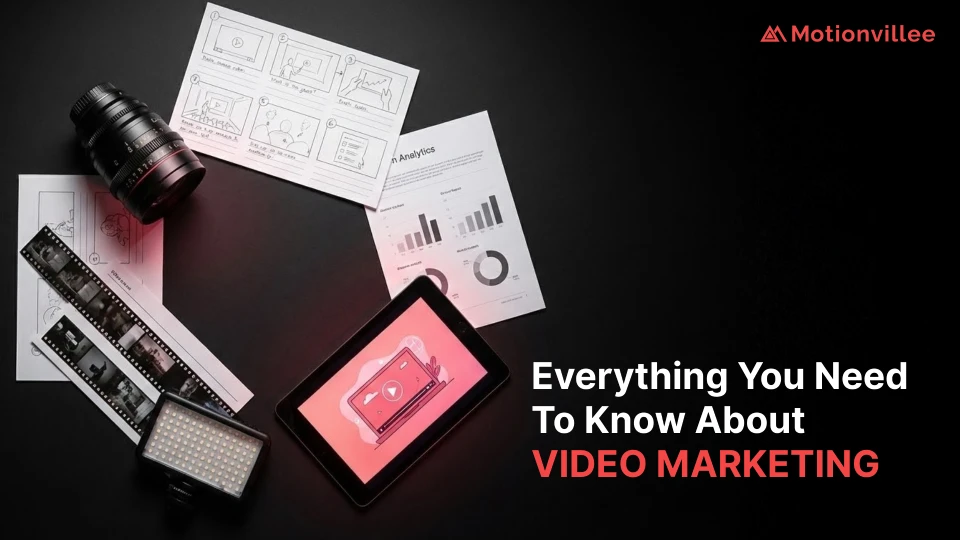
Everything You Need To Know About Video Marketing
Video marketing is taking over. 91% of businesses now use video as a marketing tool, and 90% of marketers say it delivers good ROI.
Here’s why that matters. When people want to learn about a product, 63% prefer watching a short video over reading articles or downloading ebooks.
This guide breaks down everything you need to know. You’ll learn what types of videos work, where to share them, and how to measure results without getting lost in complicated metrics.
What is Video Marketing?
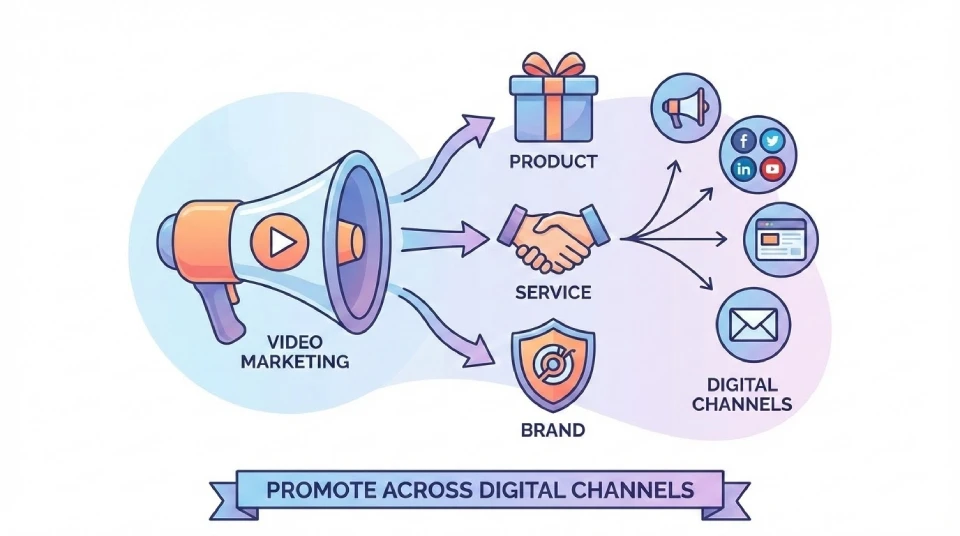
Video marketing is using video content to promote your product, service, or brand across digital channels.
It’s not just making random videos and hoping they work. You’re learning how to create content people actually watch, content that educates your audience, builds trust, and moves them toward buying.
Think of it this way. Instead of telling people what you do, you show them.
Companies using comprehensive video strategies: create different videos for different purposes. Some explain products. Others share customer success stories. Each one has a specific job to do.
The key difference? Every video answers a question your potential customers are already asking.
Why Does Video Marketing Work So Well?
Video works because people retain 95% of information from video compared to just 10% from text.
Your brain processes video faster. It creates emotional connections that text alone can’t match.
The results speak for themselves. 93% of marketers say video has helped them increase brand awareness.
But awareness is just the start. Here’s what really matters:
- 82% say video increased web traffic
- 85% say video helped generate leads
- 83% say video directly increased sales
People trust what they see. 82% of people have been convinced to buy a product after watching a video.
Quality matters too. 87% of consumers say video quality impacts their trust in a brand. Poor production undermines your message.
What Types of Videos Should You Create?
The most popular video types are testimonials, explainer videos, product demos, social media videos, and how-to content.
Different videos do different jobs. 39% of marketers create video testimonials, making it the most popular type. Explainer videos come in second at 38%.
Explainer Videos
These simplify complex ideas. 91% of people have watched an explainer video to learn about a product. High-performing explainer videos do this better than any other format.
When you need clarity fast, professional explainer videos work better than paragraphs of text.
Product Demos
Show your product solving real problems. These work great for software companies where people need to see the interface in action.
Customer Testimonials
Real customers telling real stories. These build trust faster than anything you say about yourself.
Social Media Videos
Short clips designed for Instagram, LinkedIn, or TikTok. Usually 30-60 seconds because attention spans are shrinking.
Understanding essential video types helps you build a complete library that covers your entire sales funnel.
Which Platforms Should You Use for Video Marketing?
YouTube, LinkedIn, Instagram, and TikTok are the top platforms, with YouTube reaching the broadest audience and LinkedIn driving the best B2B results.
Don’t try to be everywhere. Pick platforms where your customers actually spend time.
YouTube
The second biggest search engine in the world. Over 1 billion hours of video get watched daily on YouTube (Sixth City Marketing 2026).
Great for tutorials, how-to guides, and content that keeps bringing traffic for years.
The B2B winner. 70% of video marketers use LinkedIn, and 87% say it’s effective for lead generation.
Video ads on LinkedIn get 30% higher click-through rates than regular ads.
Perfect for visual brands. Video posts on Instagram get 38% more engagement than photos.
50% of Instagram users have visited a website to buy something after seeing it in Stories.
TikTok
Short-form video king. Growing fast with younger audiences. About 28% of marketers are increasing their TikTok focus in 2025 (HubSpot).
How Do You Create an Effective Video Marketing Strategy?
Start with clear goals, understand your audience’s problems, create videos that answer their questions, and distribute them where they’ll actually see them.
Here’s the simple framework:
Step 1: Set One Clear Goal
Don’t try to do everything with one video. Pick one objective. Drive demo bookings. Generate leads. Reduce support tickets.
“Get more awareness” isn’t specific enough. “Increase demo requests by 25% in Q2” is.
Step 2: Know Your Audience
What keeps them up at night? What questions do they ask your sales team over and over?
Create videos that answer real questions. That’s how you get engagement.
Step 3: Plan Your Content
Don’t make just one video. Companies investing in SaaS-focused video production create libraries that cover different topics and stages.
Step 4: Set a Realistic Budget
Nearly half of companies spend under $5,000 annually on video (Wistia). About a third spend more than $5,000. Use our explainer video budgeting guide to plan the right investment for your goals.
You don’t need Hollywood budgets to start. You need consistency. Understanding why explainer videos fail to convert helps you avoid costly mistakes from the beginning.
Step 5: Distribute Smart
67% of businesses share videos on their website first, then email (49%), LinkedIn (43%), and YouTube (40%).
Understanding the production process helps you plan timelines without bottlenecks.
What Are Video Marketing Best Practices for 2026?
Hook viewers in the first 3 seconds, keep videos short, add captions for silent viewing, and tell real stories instead of listing features.
Following proven video best practices makes a massive difference in results.
Grab Attention Fast
You have 3 seconds. Start with a bold statement or provocative question. Don’t waste time on long intros.
Keep It Short
Attention spans dropped from 75 seconds to 47 seconds in recent years. Get to the point faster than feels comfortable.
Add Captions Always
80% of LinkedIn videos are watched without sound. Captions aren’t optional anymore.
254% more businesses added captions in 2023 than in 2022. They improve both accessibility and engagement.
Show Real Stories
60% of consumers say user-generated content is the most authentic form of advertising.
Authenticity beats polish every time.
Optimize for Mobile
70% of YouTube videos are watched on mobile devices. Make sure text is readable on small screens.
How Do You Measure Video Marketing Success?
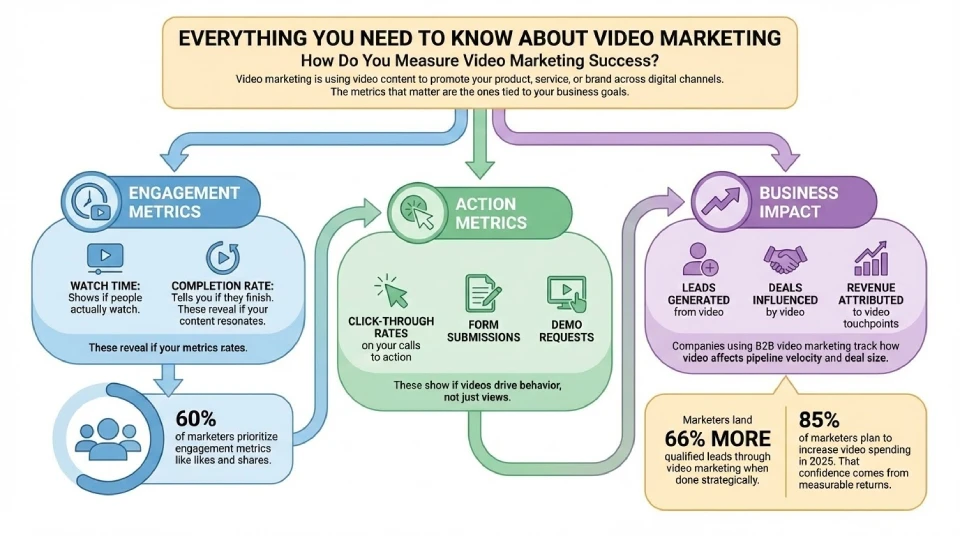
Track watch time, completion rates, click-throughs, and leads generated. The metrics that matter are the ones tied to your business goals.
View counts don’t pay bills. Focus on what actually moves the needle.
Engagement Metrics
Watch time shows if people actually watch. Completion rate tells you if they finish. These reveal if your content resonates.
60% of marketers prioritize engagement metrics like likes and shares.
Action Metrics
Click-through rates on your calls to action. Form submissions. Demo requests.
These show if videos drive behavior, not just views.
Business Impact
Leads generated from video. Deals influenced by video. Revenue attributed to video touchpoints.
Companies using B2B video marketing track how video affects pipeline velocity and deal size.
Marketers land 66% more qualified leads through video marketing when done strategically.
85% of marketers plan to increase video spending in 2025. That confidence comes from measurable returns.
Start Creating Videos That Drive Results
Video isn’t optional in 2026. It’s projected to account for 82% of all internet traffic.
The companies winning are the ones showing up with strategic video content. Not random posts. Not one-off projects. Systematic video that answers questions and builds trust.
Start simple. Pick one video type that solves your biggest problem. Explaining what you do? Make an explainer video. Proving results? Get customer testimonials. Showing your product? Create a demo.
Execute it well. Then build from there.
93% of marketers consider video crucial to their strategy. The question isn’t whether to use video. It’s whether you’ll do it strategically.
Ready to create a video strategy that drives real pipeline? Schedule a strategy call with Motionvillee to discuss how professional video production transforms marketing results.